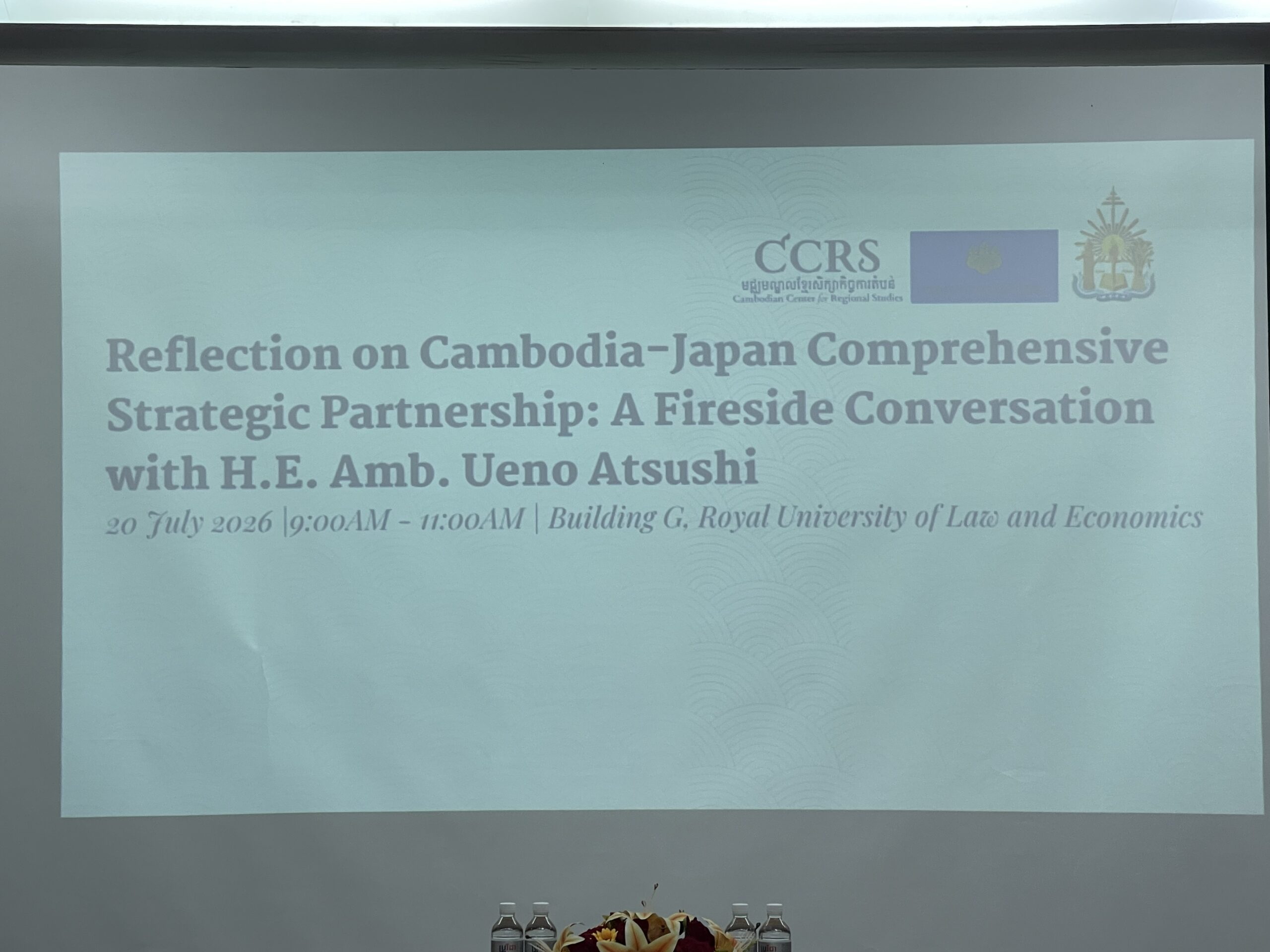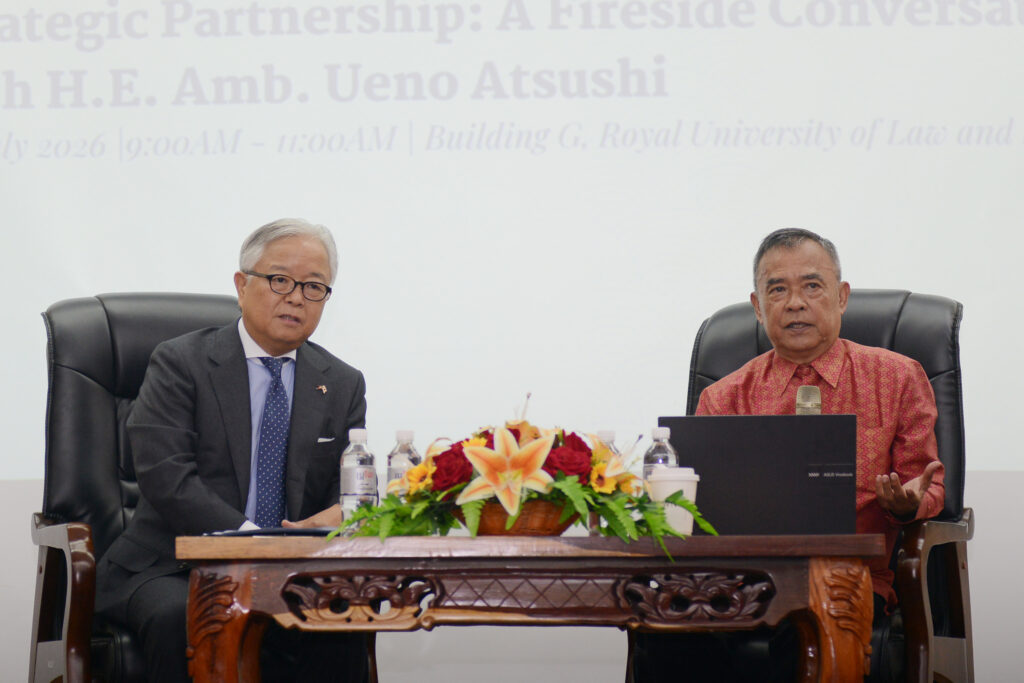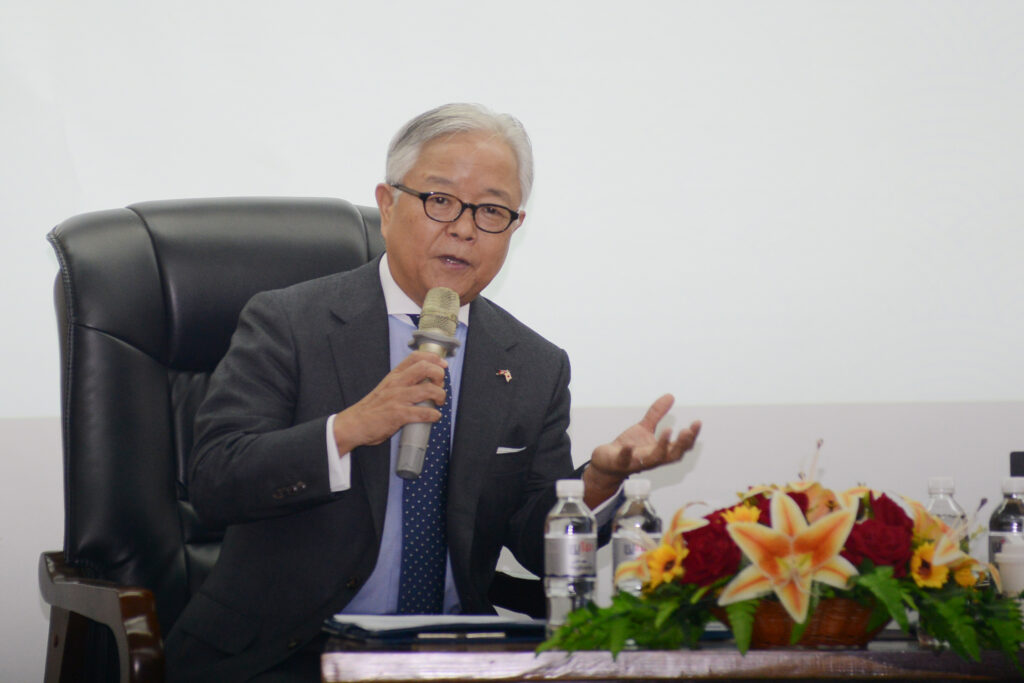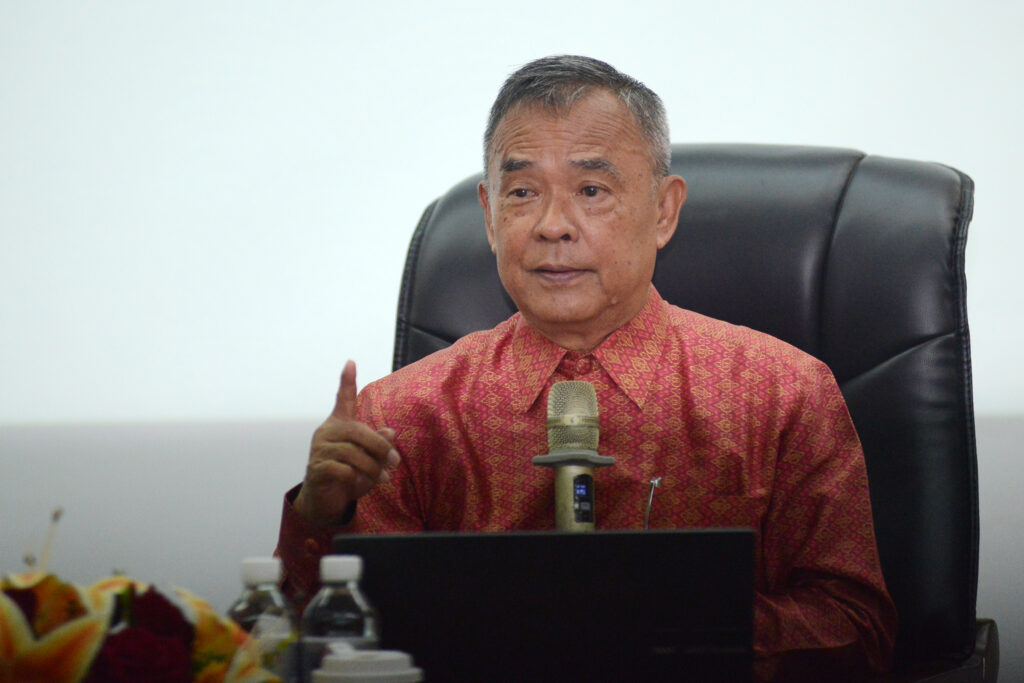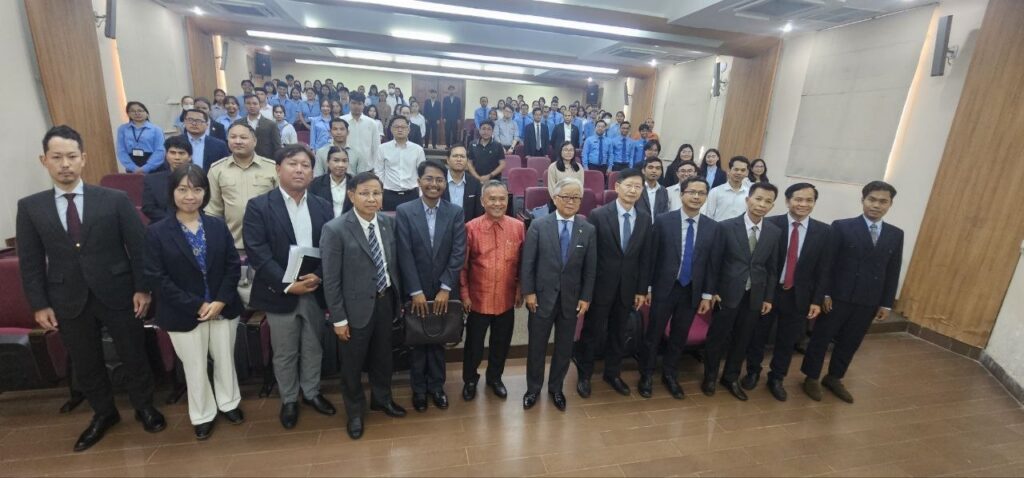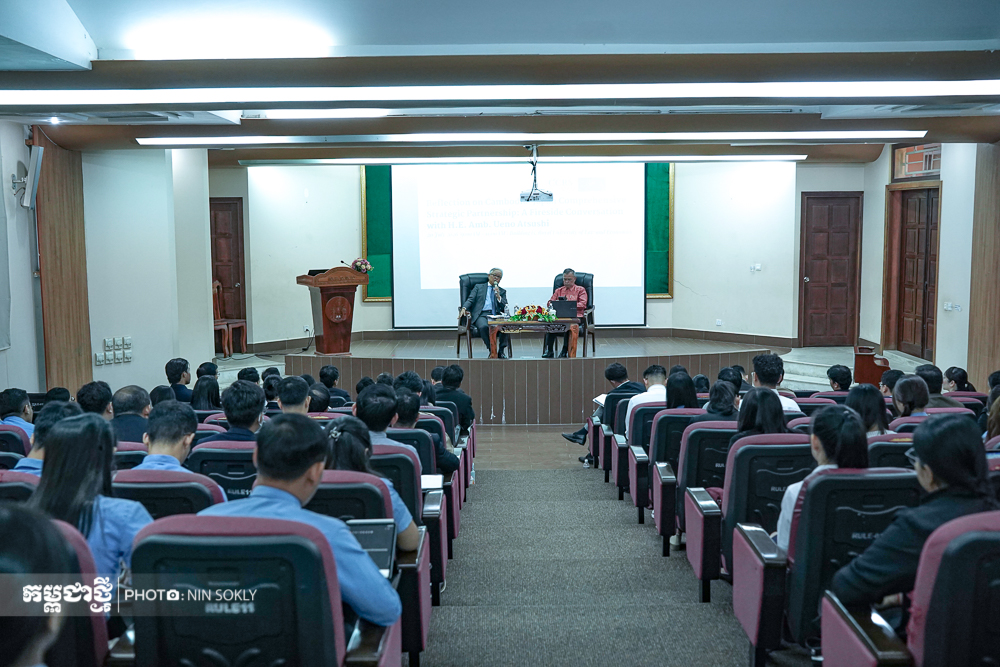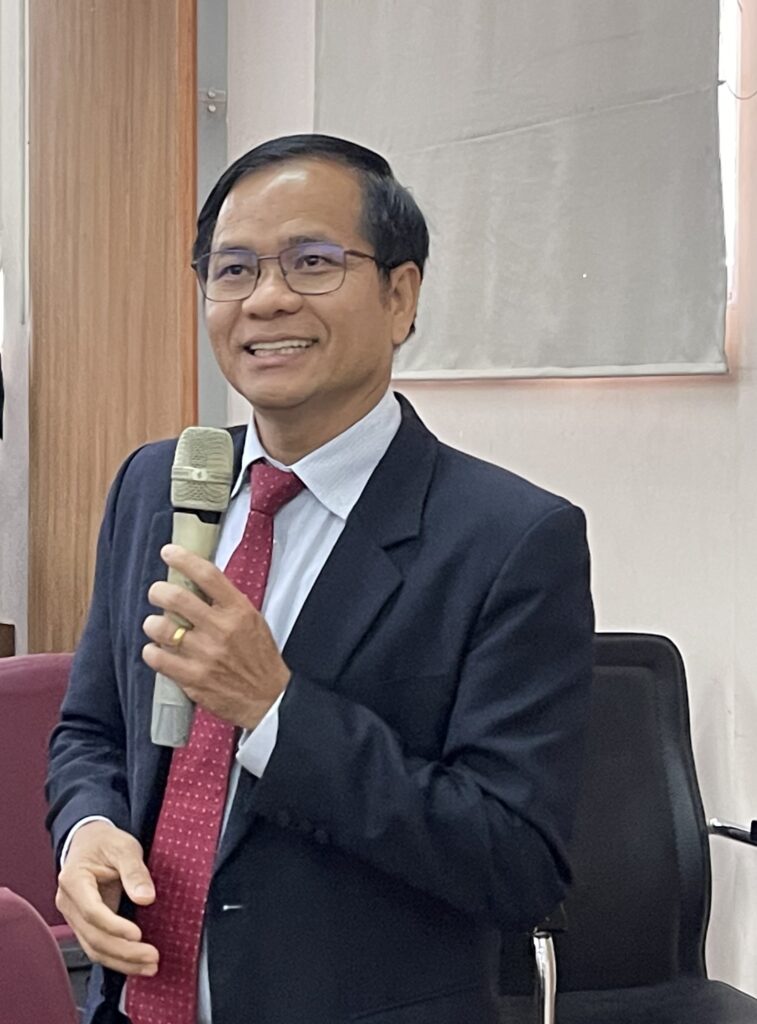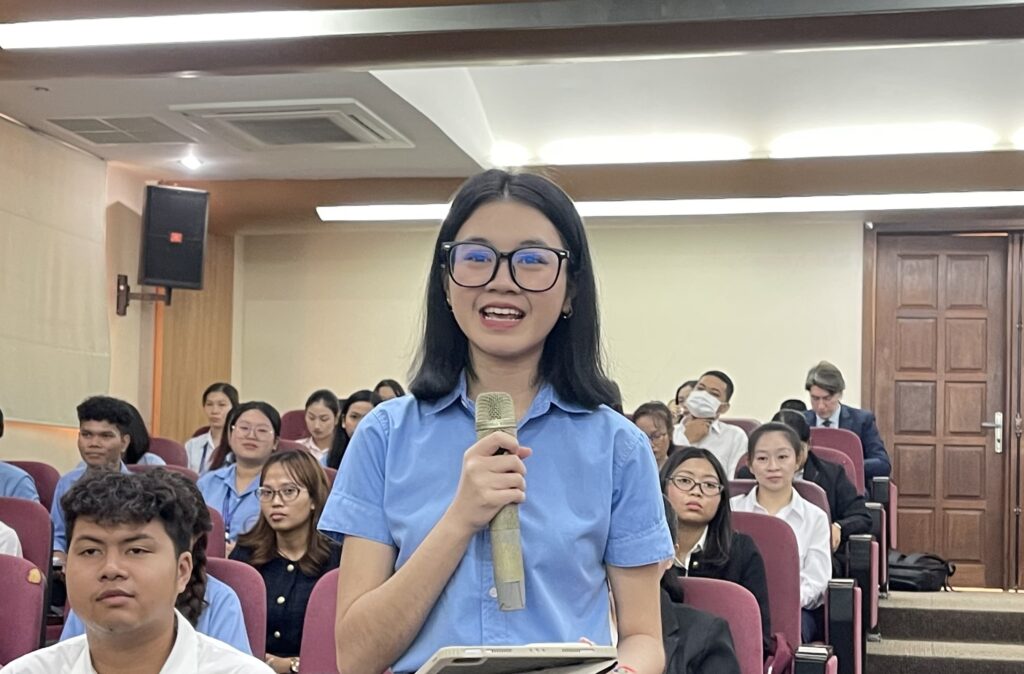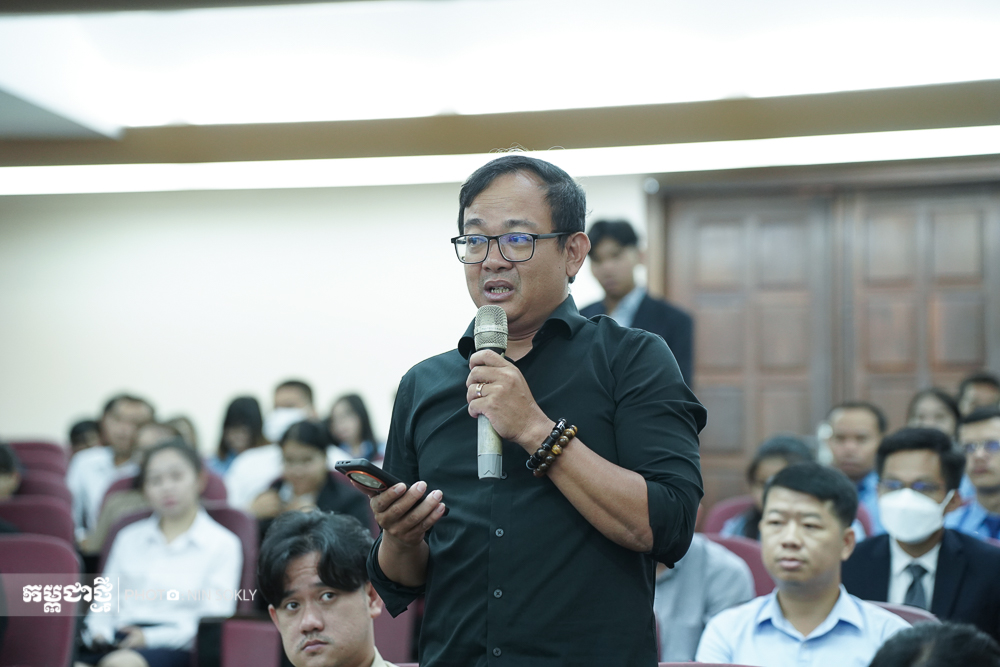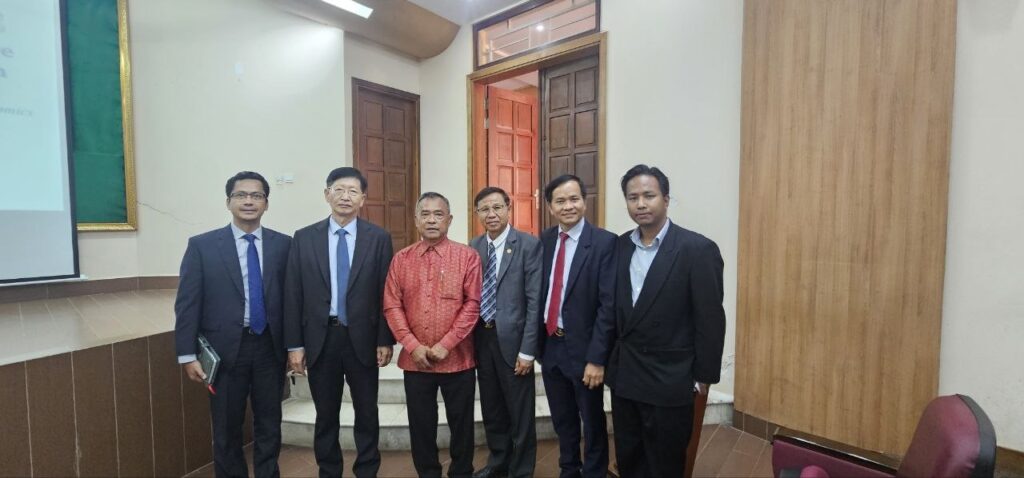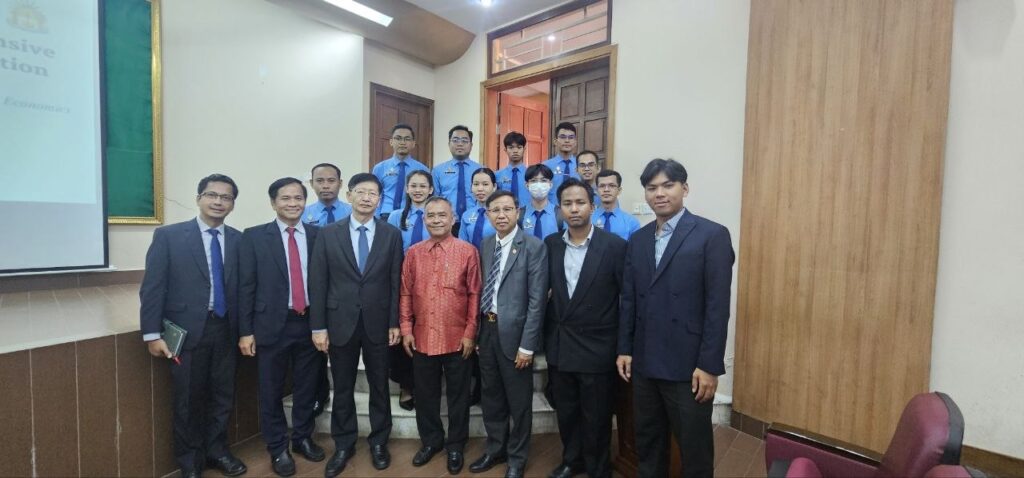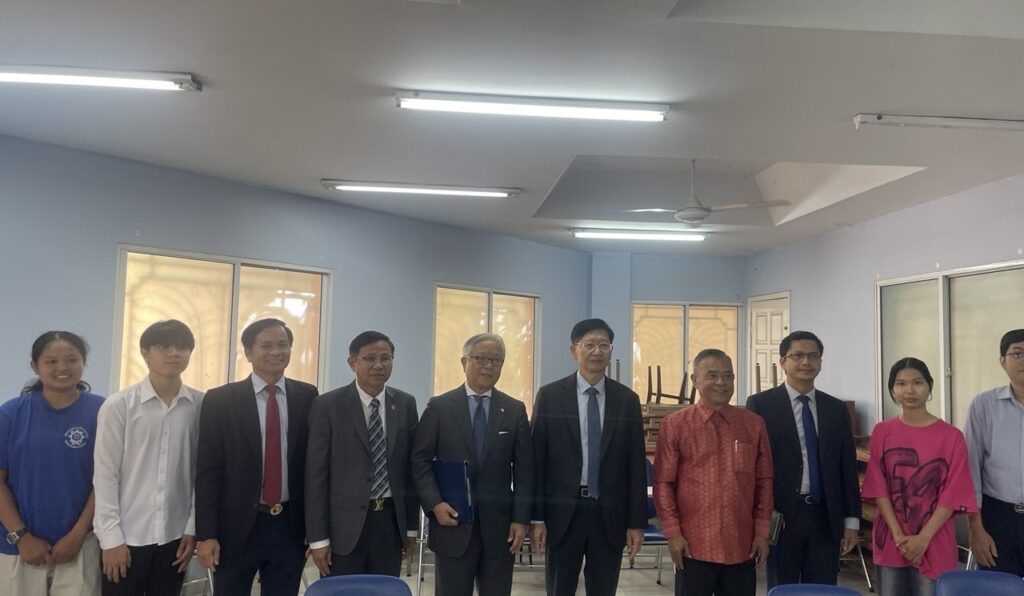
On 20 July 2026, the Cambodian Center for Regional Studies (CCRS), in collaboration with the Embassy of Japan in Cambodia and with the venue support from the the Royal University of Law and Economics (RULE), organized an event on “Reflection on Cambodia-Japan Comprehensive Strategic Partnership: A Fireside Chat with H.E. Amb. Ueno Atsushi” at the Royal University of Law and Economics (RULE). The event featured H.E. Ueno Atsushi, the outgoing Ambassador of Japan to Cambodia, and was moderated by Amb. Pou Sothirak, Distinguished Senior Advisor to CCRS. The event drew more than 100 participants including Cambodian government officials, academia, the press corps, and university students.
At the outset, the Amb. Pou welcomed the participants, emphasizing that the event aimed to deepen public understanding of bilateral ties and foster cooperation on regional and global issues. Before giving the floor to the distinguished speaker, Amb. Pou took the opportunity to highlight the important bilateral relations between Japan and Cambodia and the valuable contributions Amb. Uneo Atsushi has done for Cambodia during his tenure as an active Japanese Ambassador to Cambodia.
Japan has played an important role in bringing peace and development to Cambodia. Japan exercised a prominent function in the preliminary negotiations that led to the Paris International Conference on Cambodia in July 1989 and was co-chairman with France of the conference which concluded with the signing of the Paris Peace Agreements on Cambodia in October 1991. Since peace has returned back to Cambodia in 1993, Japan has provided substantial financial and technical assistance to Cambodia especially for repairs and rehabilitation of the infrastructure of the country. Since 1993 Japan has helped build and rehabilitate roads, ports, bridges, electrical systems, water treatment facilities across the country. These projects are durable, quality construction that promotes further development of the country.
Immediately assuming his ambassadorial post in January 2023, Ambassador UENO has worked diligently to provide strong and consistent support to Cambodia, especially in the fields of infrastructure, education, cultural, and people-to-people exchanges between Cambodia and Japan. Under his diplomatic stewardship, the relationship between Japan and Cambodia have grown from strength to strength rising through numerous initiatives and meaningful collaborations that have culminated in tangible improvements to the Cambodian livelihood and strengthen Cambodian and Japan relations meaningfully throughout the span of time of productive engagement between the two countries.
During his ambassadorial posting in Cambodia from January 2023 to July 2026 , the outgoing Japanese Ambassador to Cambodia has signed numerous landmark agreements, including water supply system to improve public health and urban resilience, agreement with the ILO for a project to promote the employment of returning Cambodian migrant workers affected by regional border conflicts, the newly initiated military and security cooperation agreement by providing approximately $3 million in Official Security Assistance (OSA) to the Royal Cambodian Armed Forces. Amb. Ueno has been a staunched promoter of Japanese tourists to boost visitors to the Kingdom of Cambodia, provided numerous scholarships to Cambodian students studying at various universities in Japan, and backed up banking programs that promote the use of the local currency (Khmer Riel) and supported the National Bank of Cambodia in building the capacity of young researchers. He has made significant contributions in the strengthening the bilateral Comprehensive Strategic Partnership between the two countries.
As for the farewell public engagement today before his departure for a new post, Amb. Ueno drew on his three-and-a-half-year tenure in Phnom Penh to provide a comprehensive account on the evolving Cambodia-Japan relationship during the interacting exchange with students of the Royal University of Law and Economy. The fireside chat primarily covers three critical domains of the partnership: the rule of law and human capital, energy and economic resilience, and regional security cooperation.
First, the Rule of Law and Human Capital Development: Amb. Ueno emphasized Japan’s foundational role in supporting Cambodia’s legal and judicial frameworks since the early 1990s, particularly the development of the civil code. Highlighting Cambodia’s recent ratification of UNCLOS in January 2026, he strongly advocated for utilizing rules-based international mechanisms to peacefully resolve disputes, such as the current border tensions with Thailand. Furthermore, he praised Cambodia’s young demographic potential and underscored the success of Japan’s educational assistance, noting that over 1,600 Cambodians have received government scholarships to study in Japan, many of whom now serve in high-level government and business leadership roles.
Second, Energy Security and Supply Chain Resilience: Addressing the vulnerabilities exposed by global crises, such as the disruption in the Strait of Hormuz, the Ambassador detailed Japan’s proactive strategies to secure energy. He highlighted the AZEC Plus (Asian Zero Emission Community) summit and the new “Power Asia” concept aimed at strengthening regional energy and mineral resilience. Amb. Ueno advised that Cambodia could insulate itself from global energy shocks and attract environmentally conscious investments by maximizing its domestic hydro and solar power capacities. He also noted that diversifying supply chains away from over-reliance on a single country is increasingly vital for both economic stability and national security.
Third, Regional Security and Geopolitical Balancing: Discussing Japan’s updated Free and Open Indo-Pacific (FOIP) vision, Amb. Ueno commended Cambodia for maintaining a balanced, independent, and non-aligned foreign policy amidst US-China strategic competition. He highlighted the historic signing of the Official Security Assistance (OSA) agreement, through which Japan is providing communication equipment and a naval patrol boat to the Cambodian Armed Forces. The Ambassador explained that this assistance is designed to enhance Cambodia’s maritime domain awareness and self-defense capabilities, empowering the nation to protect its sovereignty while contributing to the broader peace and stability of the ASEAN region.
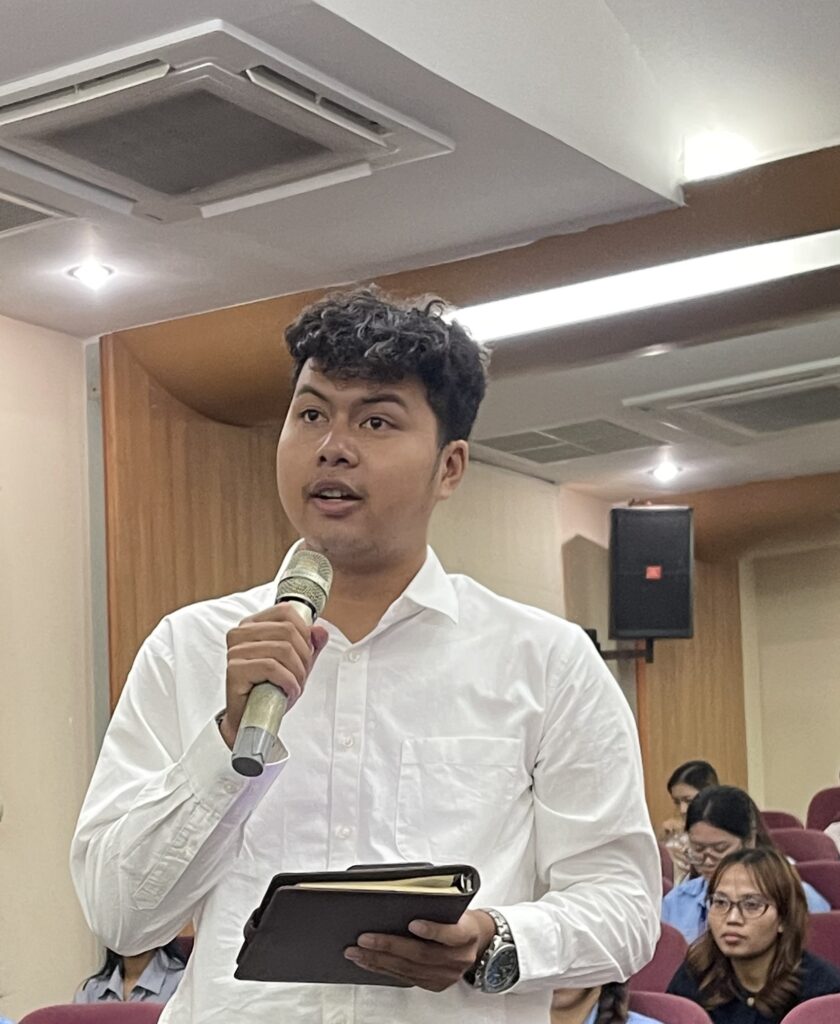
There were productive engagements during the Q&A session, with participants discussing the intricacies of humanitarian concerns at the border, strategies for boosting Japanese tourism, and other issues related to bilateral cooperation and and broader regional affairs. Amb. Pou Sothirak concluded the session by stressing the critical value of intellectual exchange and urging students to proactively seek out international perspectives. All participants found the fireside chat interesting and useful for the academic exchanges as well as the deepening of knowledge and understanding of excellent relations between Japan and Cambodia.
Photo Credit: Heng Chivoan/Khmer Times, Nin Sokly/Kampuchea Thmey, Try Chhaytith