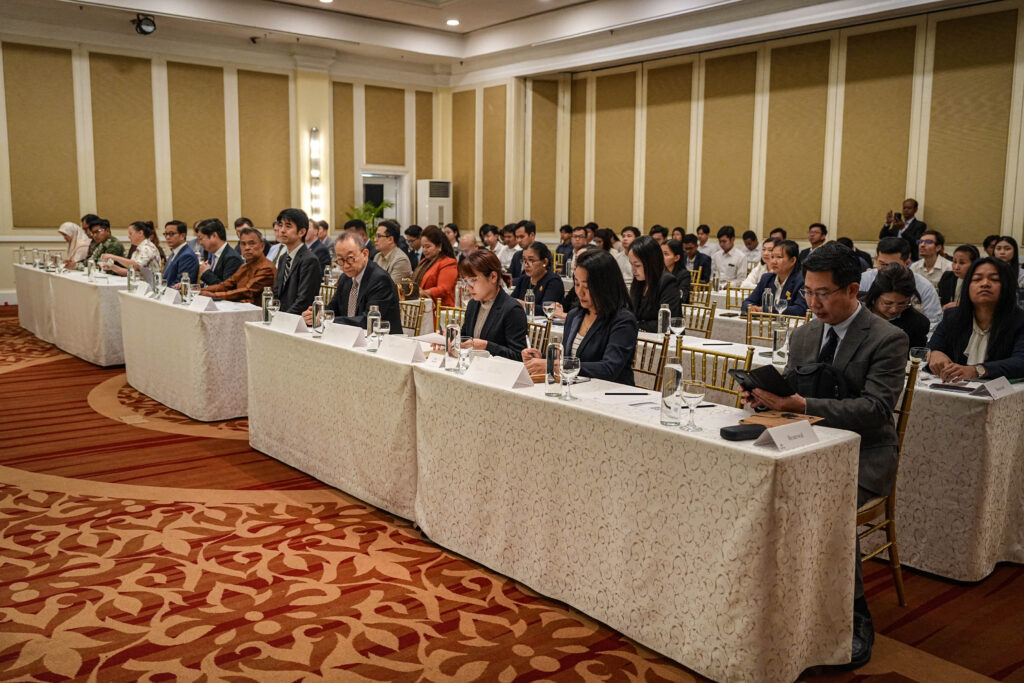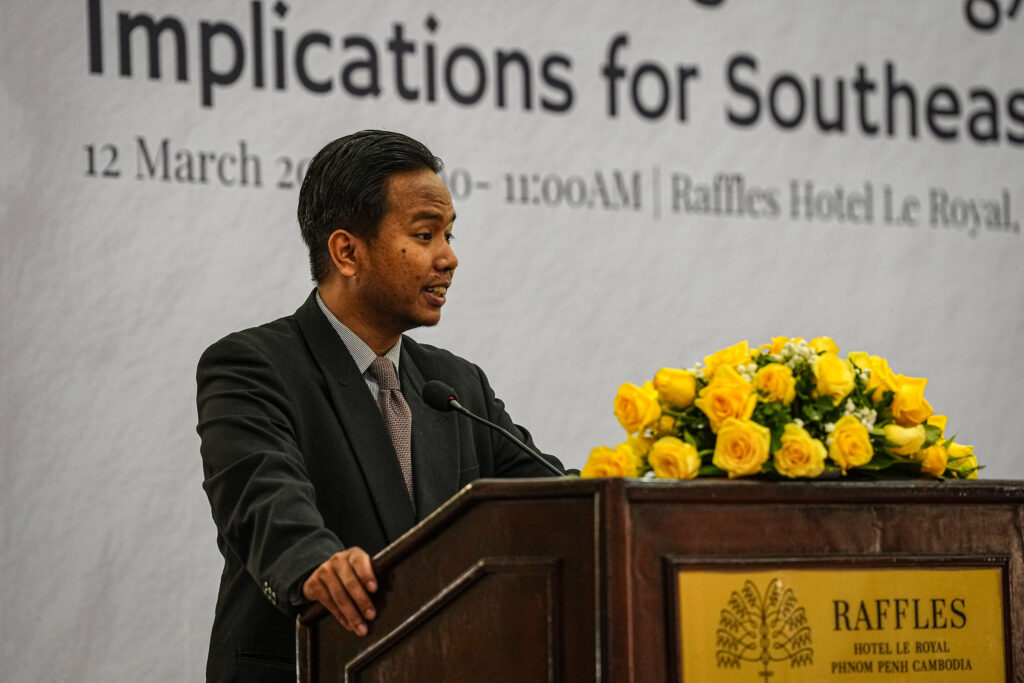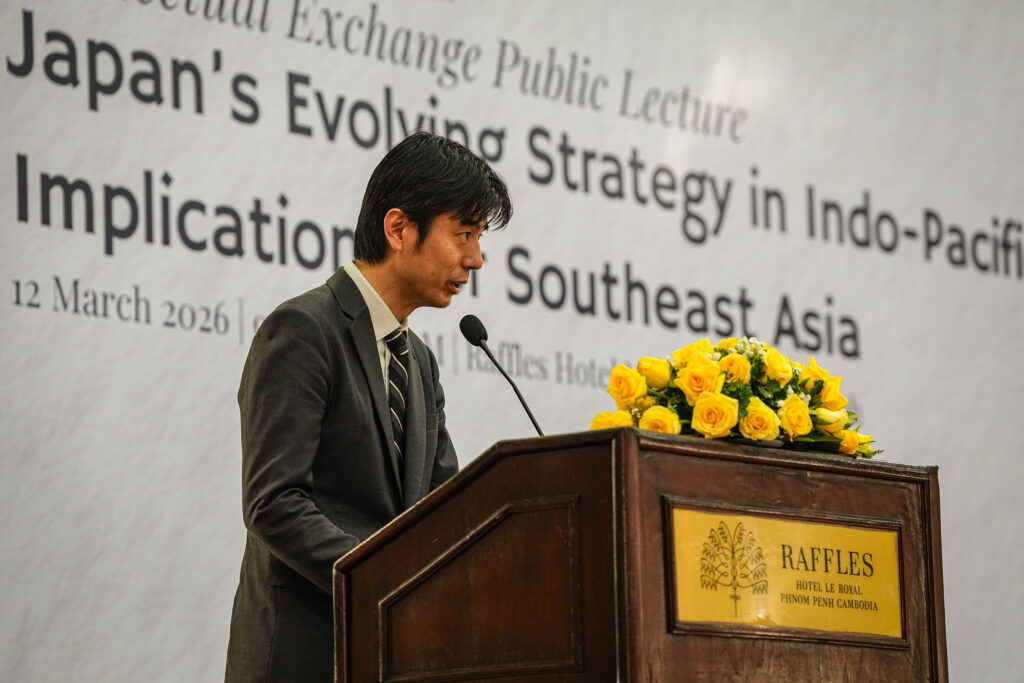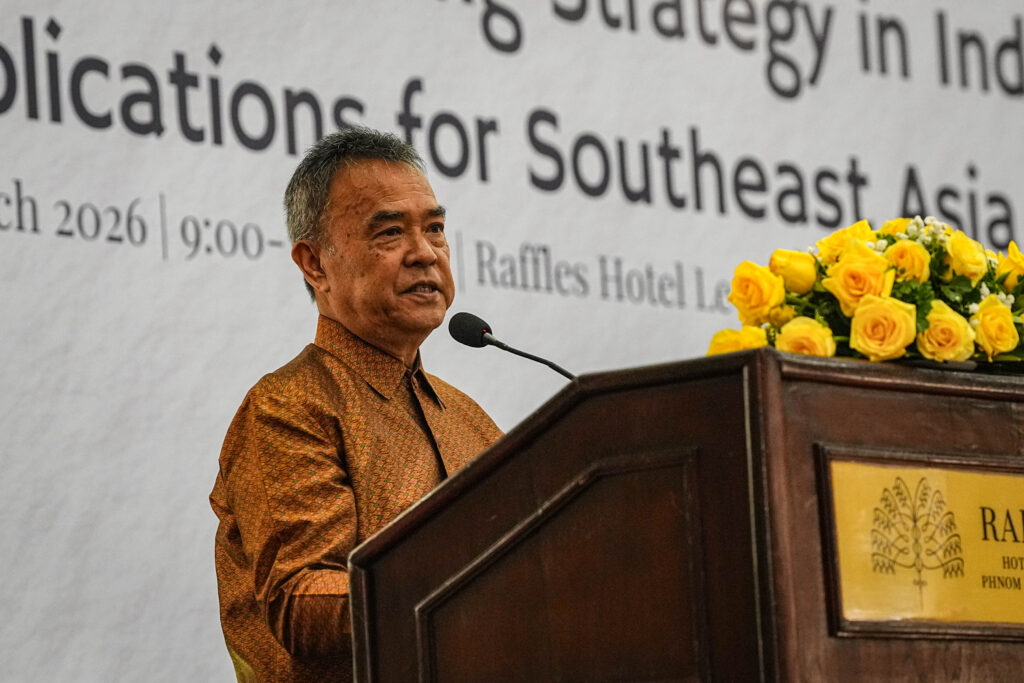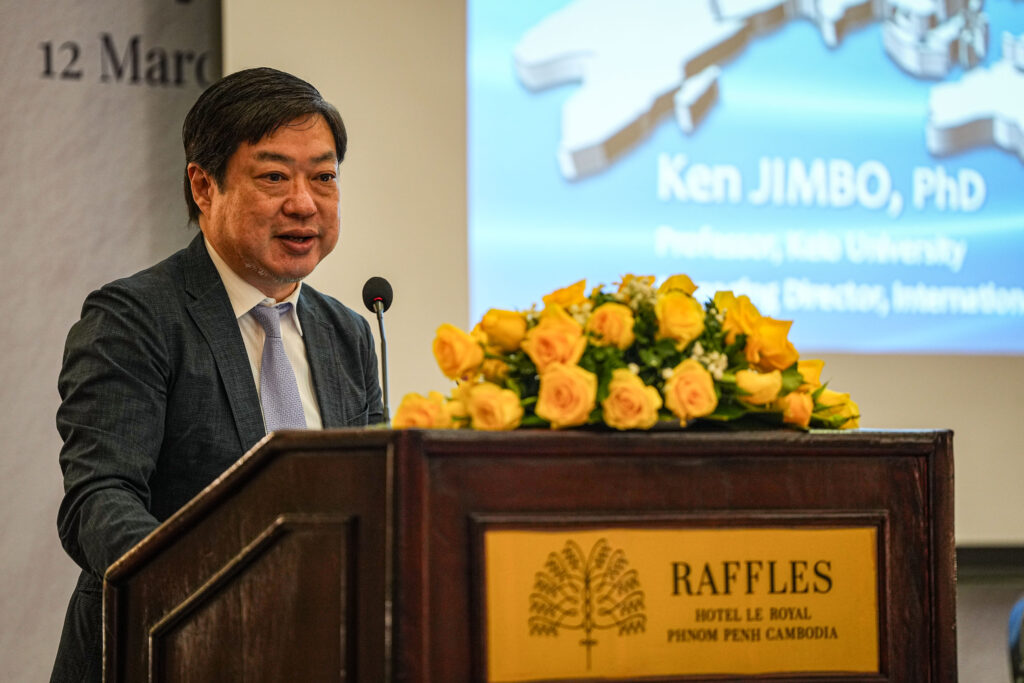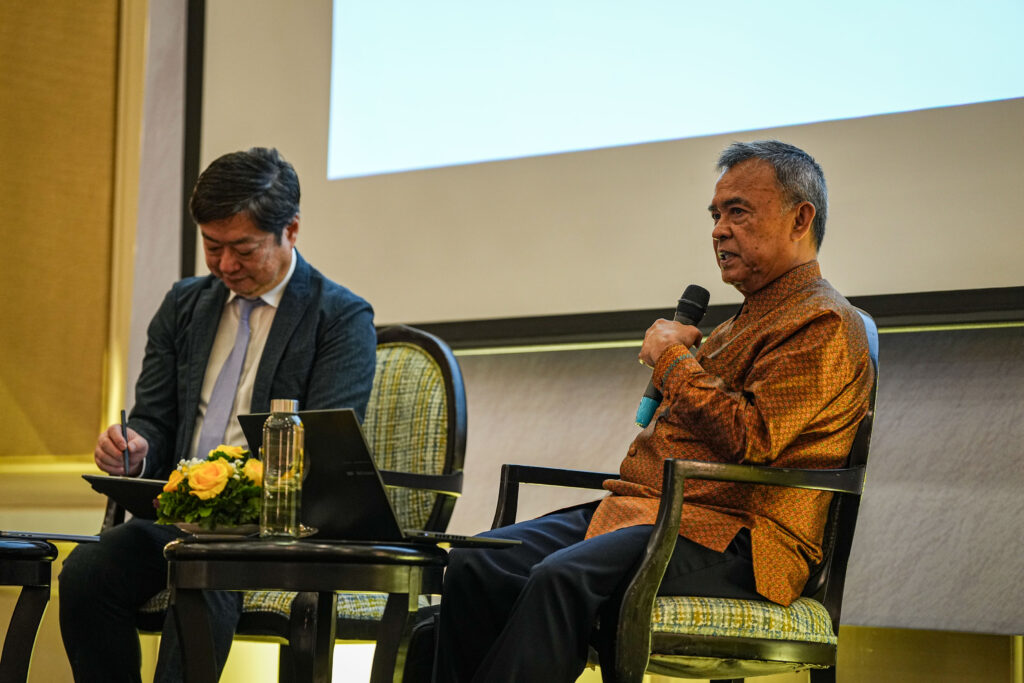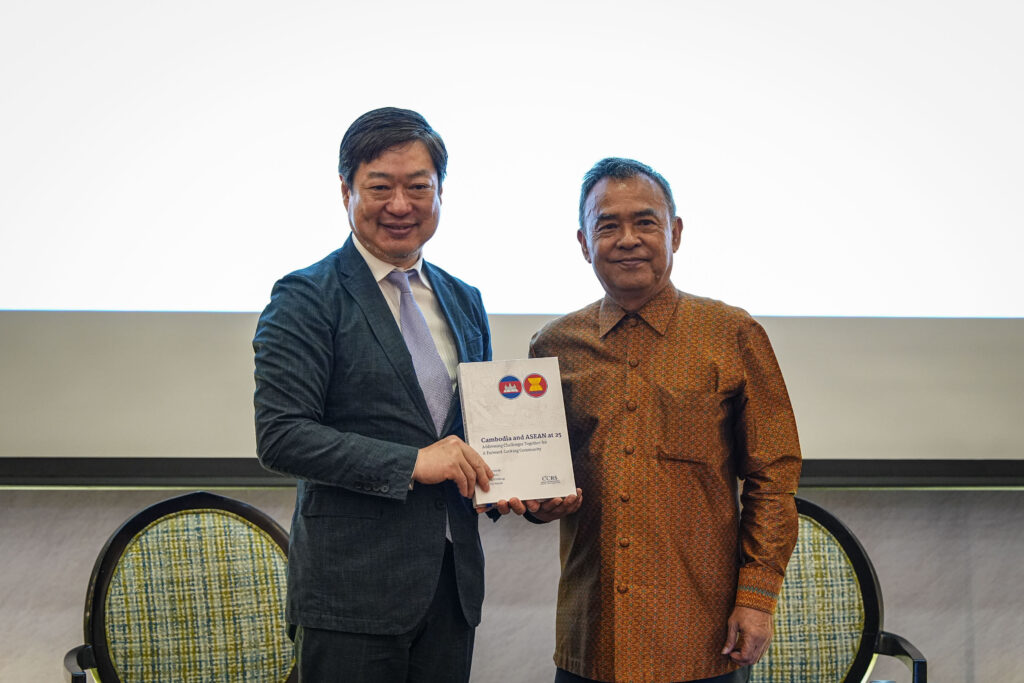
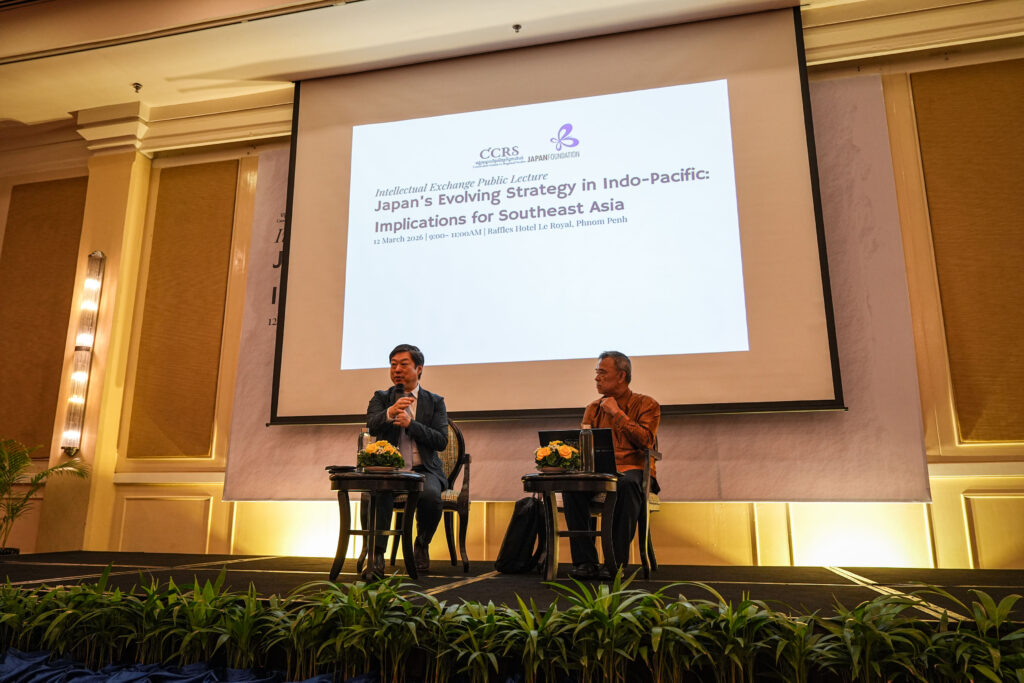
On 12 March 2026, CCRS, in collaboration with the Japan Foundation, Phnom Penh Liaison Office co-organized an intellectual exchange public lecture on “Japan’s Evolving Strategy in Indo-Pacific: Implications for Southeast Asia.” The public lecture featured Dr. Ken Jimbo, Managing Director, International House of Japan, and Professor, Faculty of Policy Management Keio University and was moderated by CCRS Distinguished Senior Advisor, Amb. Pou Sothirak. There were more than 100 participants, mostly from the Cambodian government officials, members of diplomatic corps, academia, and university students.
At the outset, Mr. Him Raksmey, Executive Director of CCRS, welcomed the full house of government officials, diplomats, academics, and students, emphasizing the importance of active intellectual engagement on regional security issues. In addition, Mr. Isogaya Hiroyuki, Director of the Japan Foundation Phnom Penh Office, shared his reflection on the 50th year of ASEAN-Japan friendship and the WA Project. He highlighted that strengthening people-to-people exchanges and deepening intellectual dialogues on international relations in Cambodia served as a key motivation for this joint seminar.
Amb. Pou Sothirak, Distinguished Senior Advisor to CCRS, gave a comprehensive review of Japan’s preoccupation with the security environment in the Indo-Pacific. He noted that Japan remains the most trusted major power in Southeast Asia, viewed as a respectful and reliable partner. He contextualized Japan’s recent decision to modernize its defense system—including doubling defense spending and acquiring counter-strike capabilities—as a direct response to the challenging security situation in East Asia, particularly around the Taiwan Strait. Amb. Pou also stressed the strong synergy between Japan’s Free and Open Indo-Pacific (FOIP) and the ASEAN Outlook on the Indo-Pacific (AOIP), acknowledging Japan’s constructive role in promoting a rules-based international order while encouraging greater participation from the Global South.
Dr. Ken Jimbo, Managing Director of the International House of Japan and Professor at Keio University, delivered the keynote presentation, tracing the evolution of regional constructs from the “Asia-Pacific” to the “Extended East Asia,” and finally to the modern “Indo-Pacific” era. He highlighted that the FOIP, initiated by former Prime Minister Shinzo Abe in 2016, is a dual-track strategy involving both competitive deterrence to uphold the status quo and regional cooperation in trade, investment, and infrastructure.
Dr. Jimbo made a strong point that FOIP has no “copyright”; it is an inclusive, open-source concept that allies, partners, and ASEAN nations can adapt to their unique strategic needs. He elaborated on Japan’s 2022 National Security Strategy and the 2023 updated plan under the Kishida administration, branded as “Our FOIP.” This updated framework deliberately shifts away from Western-style political conditionality to better engage the Global South. By offering practical, high-quality development cooperation, Japan aims to foster a prosperous and inclusive economic order without forcing Southeast Asian nations to choose sides in major power rivalries.
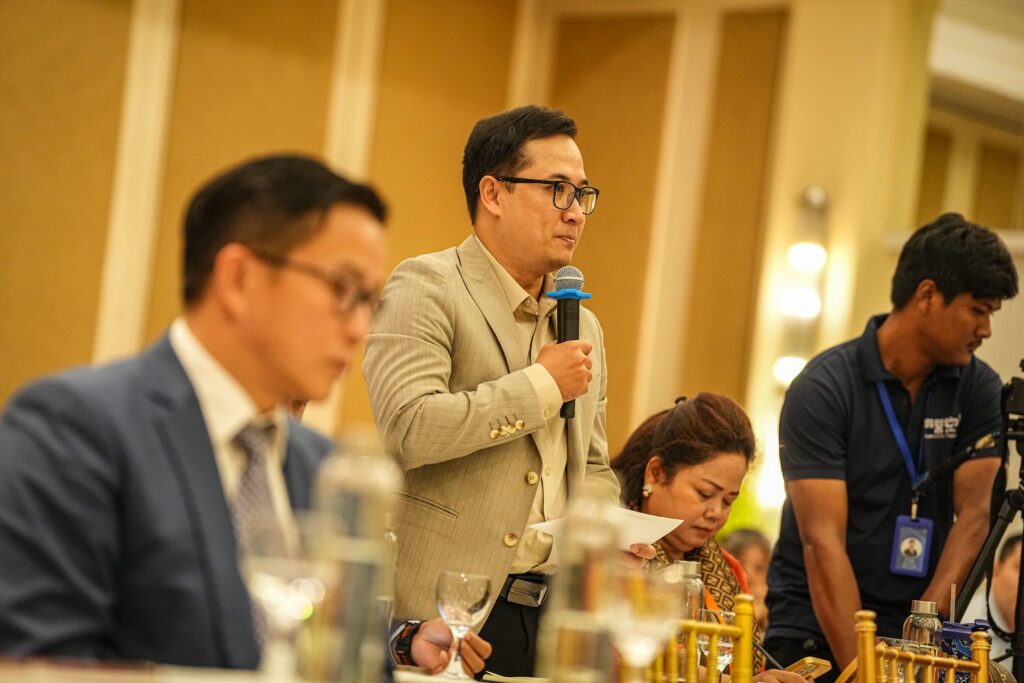
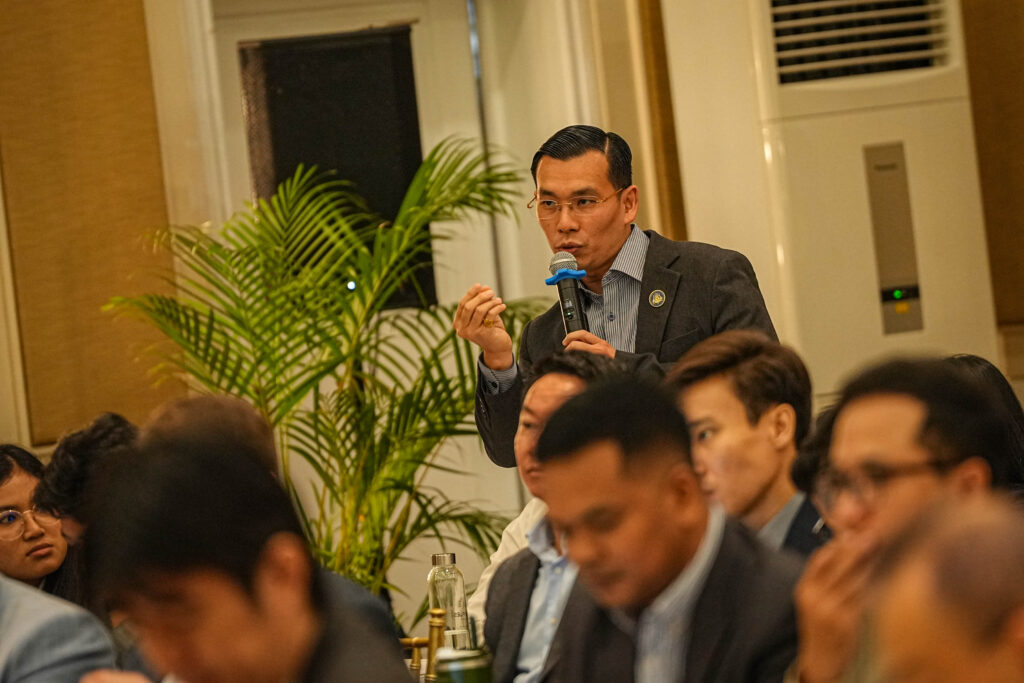
There were productive engagements with many good questions asked by participants and satisfactory answers given by the distinguished speaker. The co-organizers hope that all participants find the public lecture useful and constructive. CCRS and the Japan Foundation Phnom Penh Liaison Office wish to thank all participants for actively engaging with this topical event.
Key takeaways from the lecture include:
- The Evolution of Regional Constructs: A historical trace from the “Asia-Pacific” economic models of the 1980s to the “Extended East Asia” framework of the 2000s, culminating in the modern “Indo-Pacific” paradigm.
- The Genesis and Open-Source Nature of FOIP: Initiated by former Prime Minister Shinzo Abe in 2016, FOIP is intentionally designed without a “copyright,” allowing allies, partners, and ASEAN nations to customize and adopt the framework to their unique strategic needs.
- Geoeconomic Shifts and the Global South: Japan acknowledges the failure of the late-20th-century assumption that economic growth inevitably leads to Western-style democratization. Consequently, Japan is redesigning its engagement with the Global South, offering an inclusive, non-conditionality-based alternative to both traditional Western aid (OECD/IMF) and Chinese initiatives (BRI).
- Japan’s Strategic Awakening: Driven by threats in Northeast Asia, Japan’s December 2022 National Security Strategy marks a historic shift—doubling defense spending to 2% of GDP and acquiring counter-strike capabilities—while maintaining its commitment to cooperative regional development.