
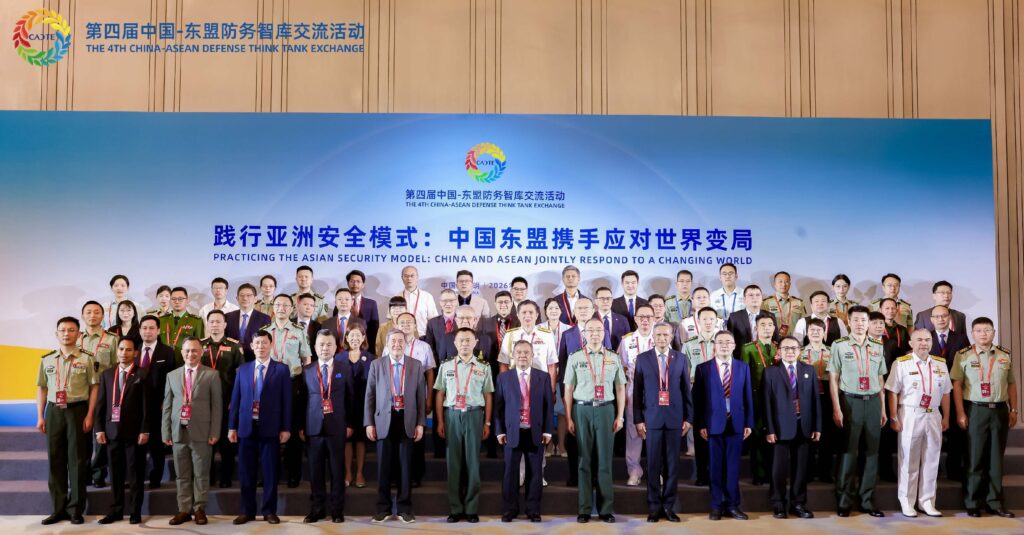
From 8 to 10 July 2026, CCRS Distinguished Senior Advisor, Ambassador Pou Sothirak and Deputy Director, Him Rotha attended the 4th China-ASEAN Defense Think Tank Exchange (CADTE) with the invitation by the People’s Liberation Army (PLA) Military Academy of Sciences in Kunming, China.
Amb. Pou gave a speech at the Plenary Session on “Practicing the Asian Security Model: China and ASEAN Jointly Respond to a Changing World.” He focused on how ASEAN and China jointly tackle global security dilemmas while managing security hotspots in the Indo-Pacific region. He viewed that security dilemma created unjustified harmful cycle of tensions that not only disturb overall stability of the fragile security environment of the Indo-Pacific but it can plunge the region into an unwarned conflict.
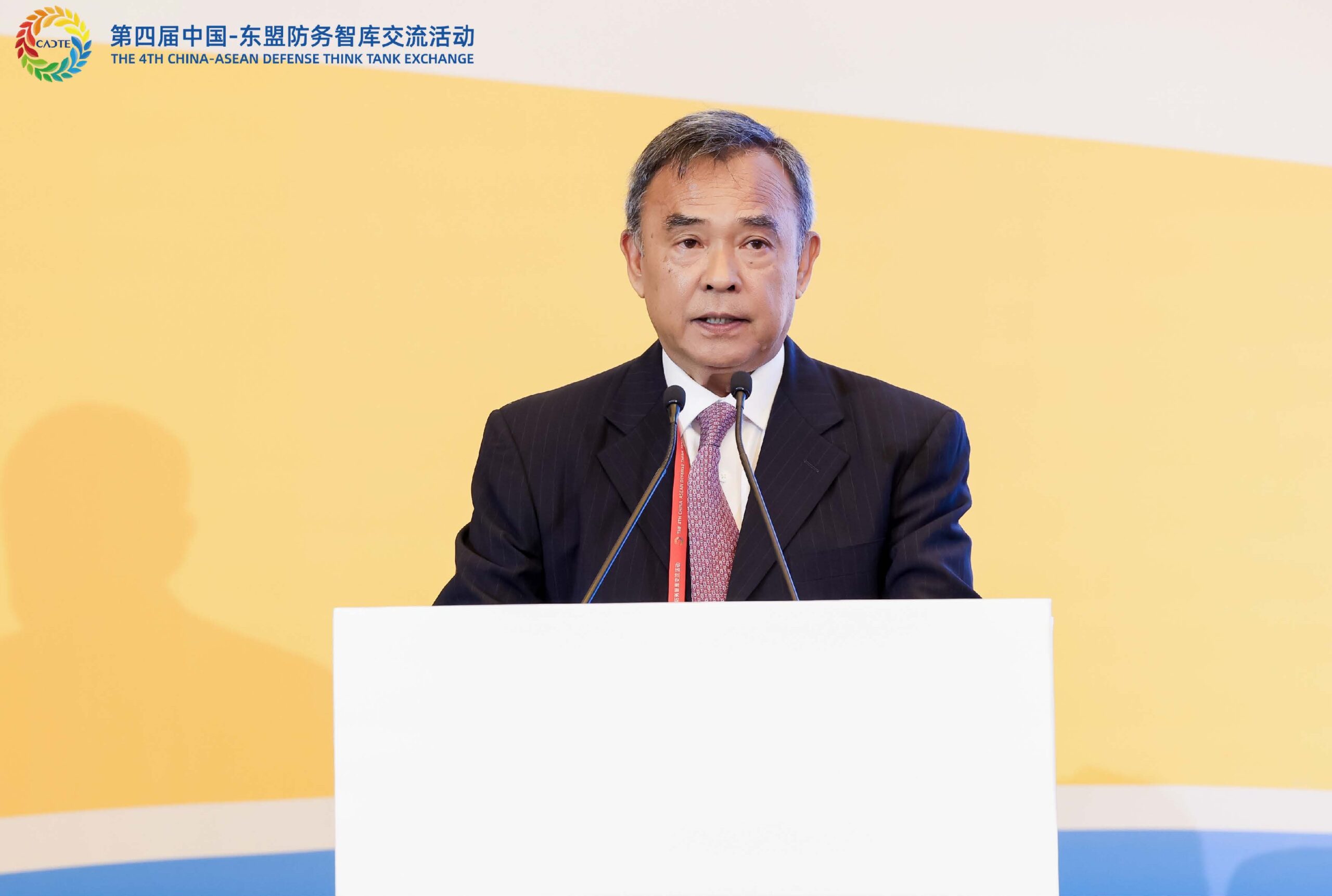
He reminded the forum that there are numerous flashpoints in the Indo-Pacific region, including the Taiwan Strait, South China Sea disputes, North Korea, the East China Sea disputes, as well as land border disputes between Thailand and Cambodia, between China and India and between India and Pakistan. Some of these disputes are exacerbated by the rise of China and the US–China great power competition. He then provided four points for ASEAN and China to preserve and enhance the peace and prosperity of the region in a bid to tackle security dilemma, while managing security hotspots in the Indo-Pacific region:
- First, ASEAN and China must carefully manage the power transition, shifting from the West eastward to preserve peace, maintain stability, and build trust and mutual respect.
- Second, China and ASEAN ought to recognize and accept the different approaches to peace and security and try to forge a collaborative approach to address common security issues.
- Third, with ASEAN’s fears of being forced to take sides in the big power rivalry, China and ASEAN should not be about the contestation between US and China but rather to strike balance relations with mutual respects between Beijing and Washington instead.
- Fourth, ASEAN and China should collectively uphold internationally recognized norms, including the fundamental respect for peaceful settlement of disputes, the respect territorial integrity and sovereignty, non-aggression, non-interference in internal affairs, and equality and mutual benefit.
Him Rotha, on the other hand, shared his perspective in a session on “Asian Paradigms and Pathways for Regional Dispute Resolution.” He began his remarks by reviewing ASEAN’s current dispute settlement mechanisms, which is driven by the Treaty of Amity and Cooperation (TAC) and the ASEAN Charter. ASEAN Dispute Settlement Mechanisms have four main processes, such as (1) friendly negotiation; (2) good office by the ASEAN Chair or the ASEAN Secretary-General; (3) invoking the High Council with the ASEAN Foreign Ministers’ Meeting; and (4) the ultimate decision by the ASEAN Summit.
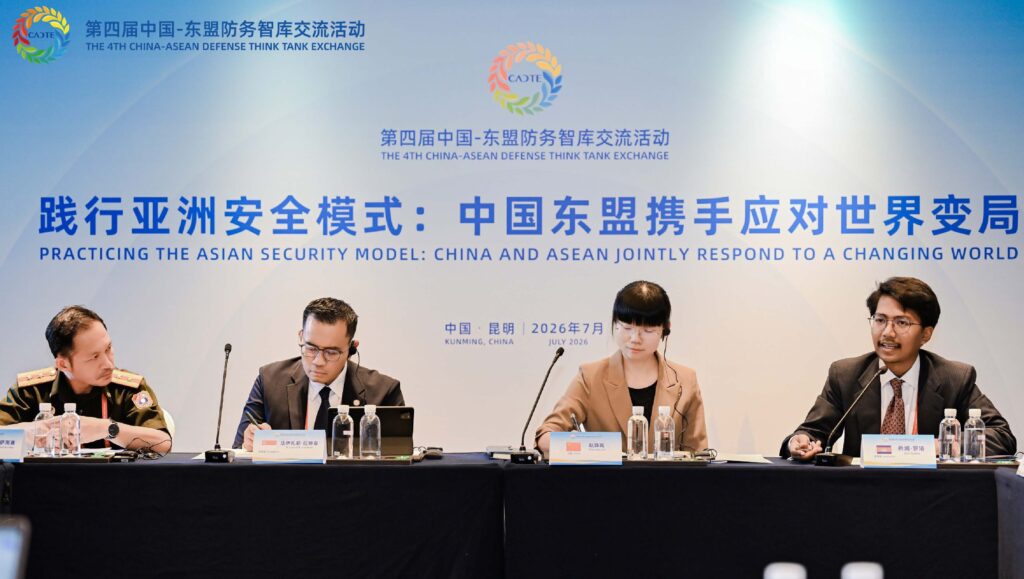
He then raised the two case studies of conflicts within the Mainland Southeast Asia in recently, including the situation in Myanmar and the Cambodia-Thailand border conflict. He synthesized that the core regional resolution of both cases has been driven by the political will of relevant regional stakeholders rather than having a streamlined and institutionalized process. His core suggestion was that the bloc should convert personality-driven coordination into a standing protocol for information and intelligence sharing. He also provided some suggestions for ASEAN-China think tanks, of which he stressed that think tanks shall shift the orientation from a convening forum into a foresight with a clear “early warning” capability to potential regional hotspots.
CCRS would like to express the appreciation towards the PLA Military Academy of Sciences for convening such timely forum as part of a knowledge exchange and confidence-building measure between ASEAN and China.