
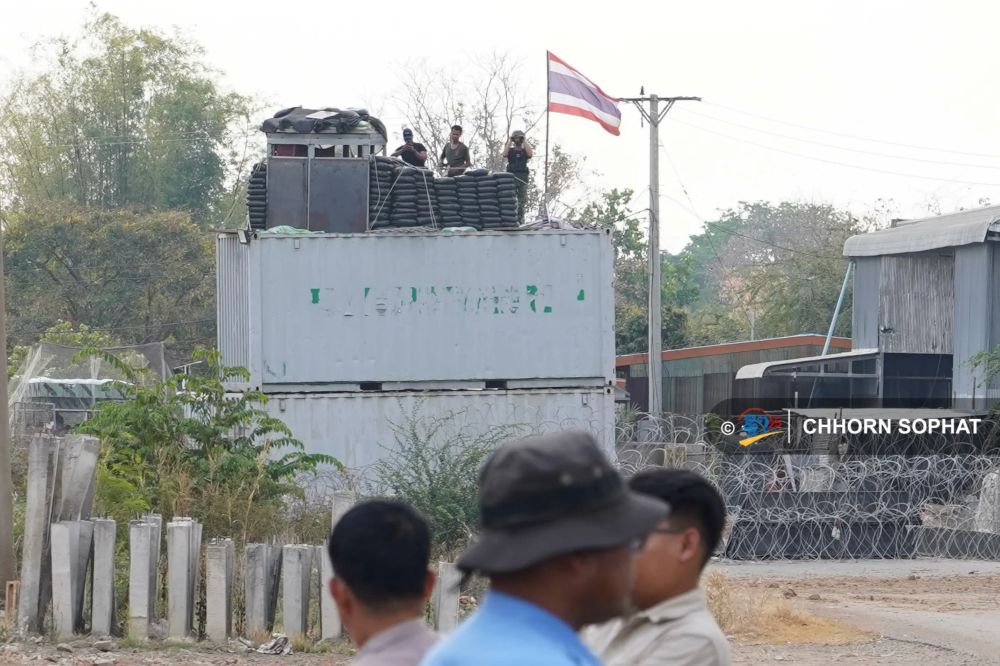
Him Raksmey, Executive Director of CCRS, shared his comments with Cambodianess regarding the one-year marking of the start of the current Cambodia-Thailand border conflict:
Two Neighbors’ Conflict Hints Challenges in Regional Stability
The bond of trust, friendship and interdependence was broken. The neighborhood meant to bring connection and prosperity became the battlefield with lives lost and suffering.
Him Raksmey, executive director of the Cambodian Center for Regional Studies (CCRS), said the conflict caused disruptions of cooperation and afflicted hardship for the livelihood, particularly locals in the border areas.
“The bilateral relations between Cambodia and Thailand, both the state-to-state and people-to-people levels, is ultimately the victim of this conflict,” Raksmey said.
The conflict was not a new dispute between the countries, but the breakout of clashes and the high degree of damage brought a warning in bilateral security and regional stability. Amid geopolitical uncertainty, ASEAN was shaken by an internal members’ conflict which undermined the region’s unity.
It posed challenges for the ASEAN’s norms of peaceful dispute settlements, particularly the principles of non-use and no threatening of using forces, as enshrined in the legally binding 1976 Treaty of Amity and Cooperation (TAC), and 2008 ASEAN Charter.
He said it undermined ASEAN Community Building Efforts, precisely the Political-Security Community, setting a bad precedence and altering the regional security balance, while border gate closures severely affected bilateral and regional trade, economic and investment activities.
Is There Hope for Two Peoples in Future Relationship?
Raksmey, stands firm on his suggestion that the most viable way forward for the countries is diplomatic engagement, along with peaceful means and fruitful talks held in in Cebu, Philippines.
Both sides need to prioritize ceasefire implementation, reconciliation, normalization and peaceful co-existence.
“As immediate neighbors, Cambodia and Thailand should always aspire to be permanent friends, and not foe – which is important not only for the two countries but also peace, stability, and prosperity in the region,” he said.