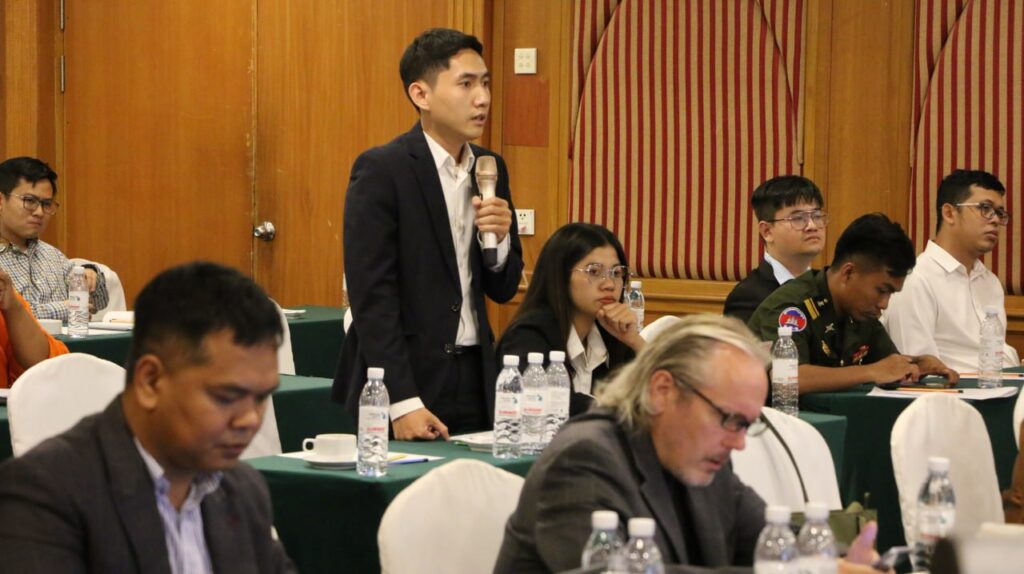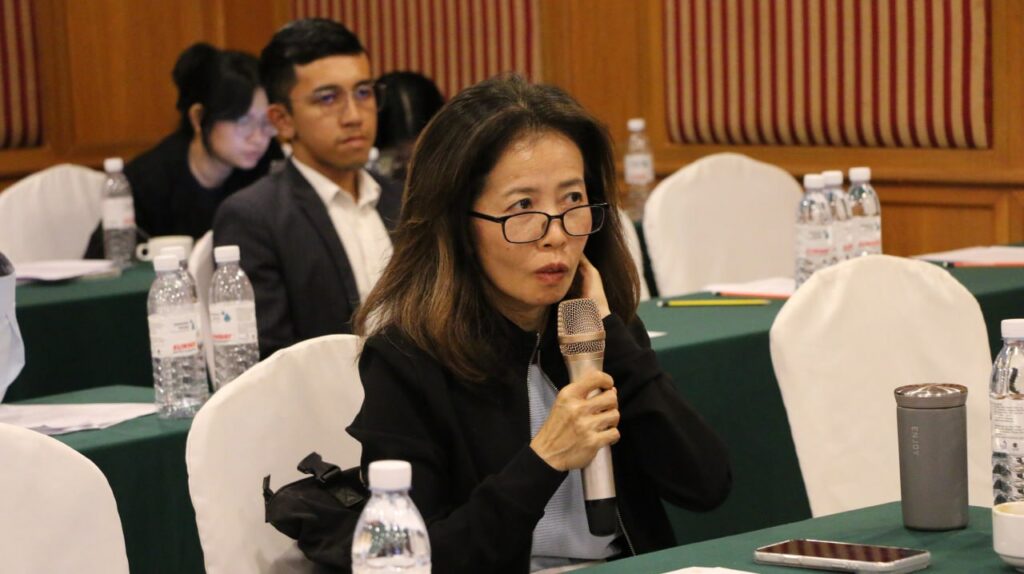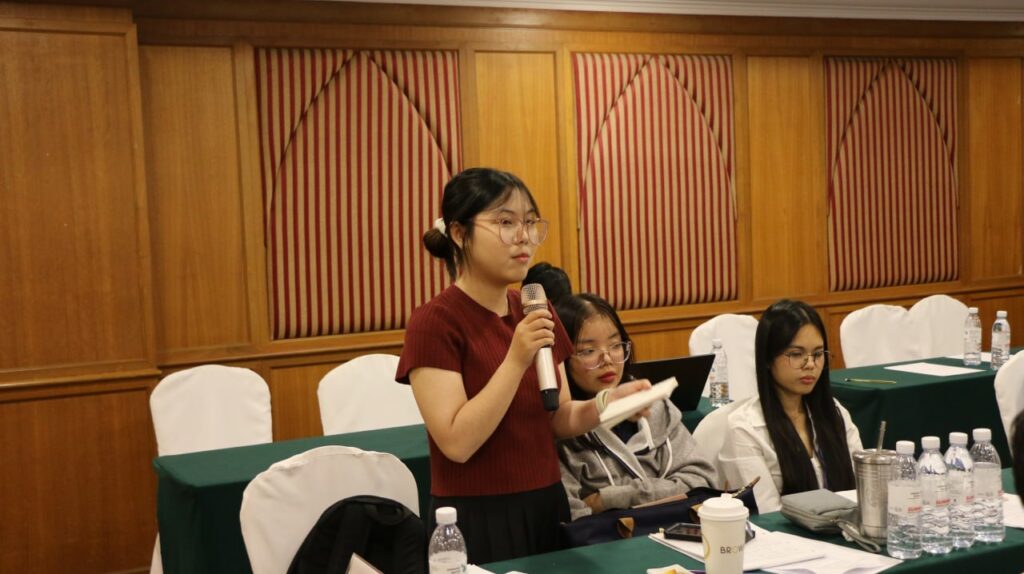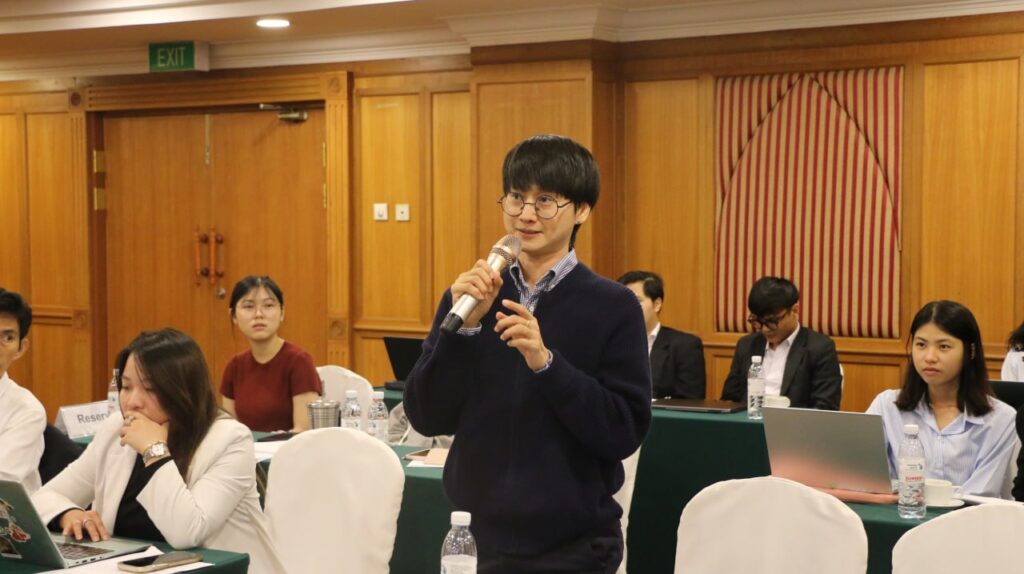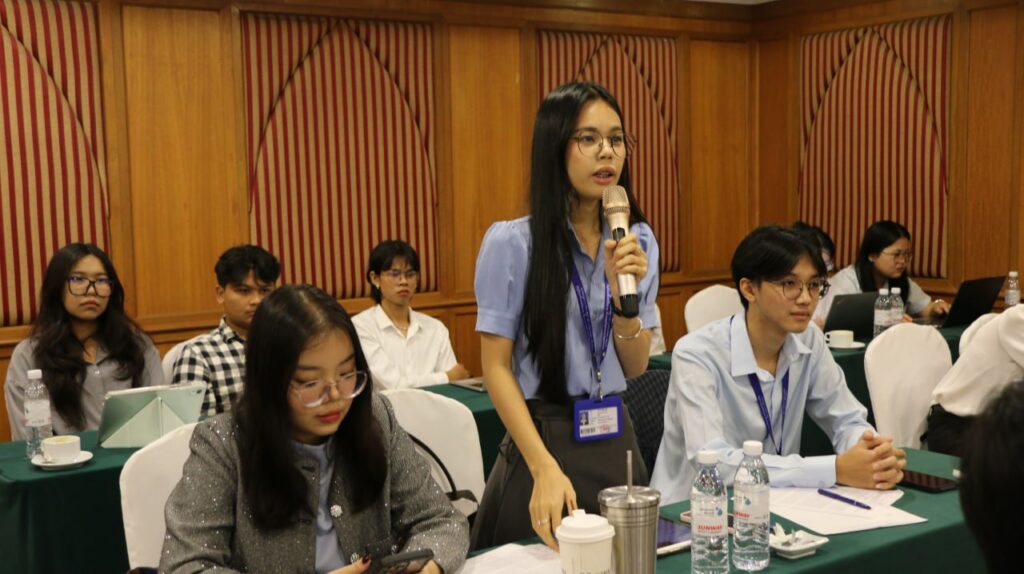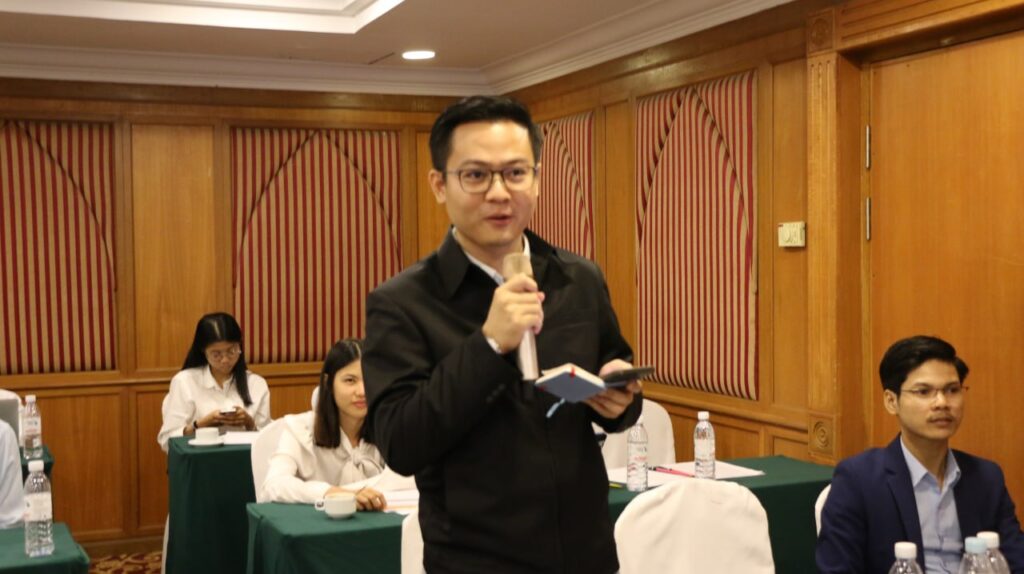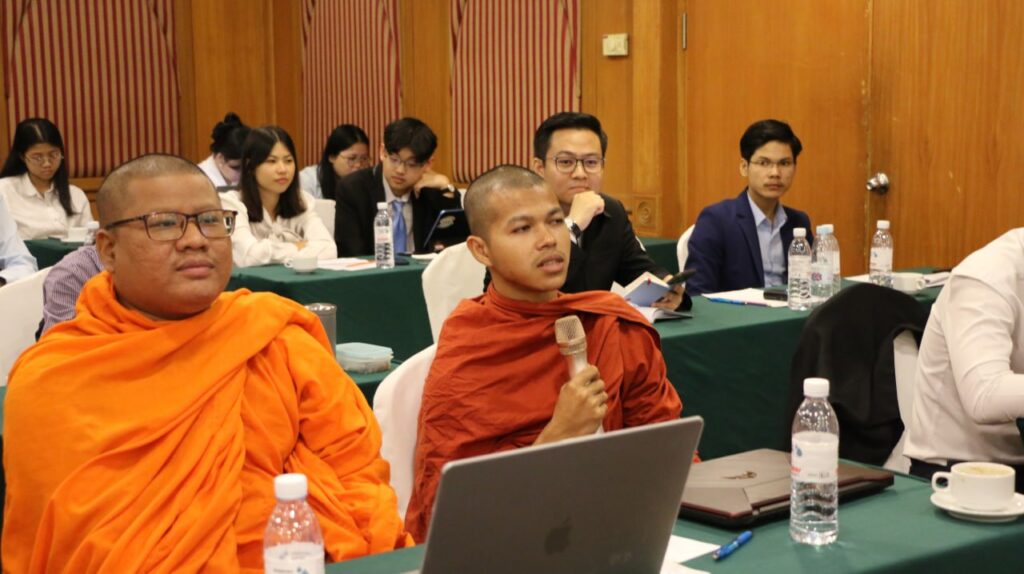
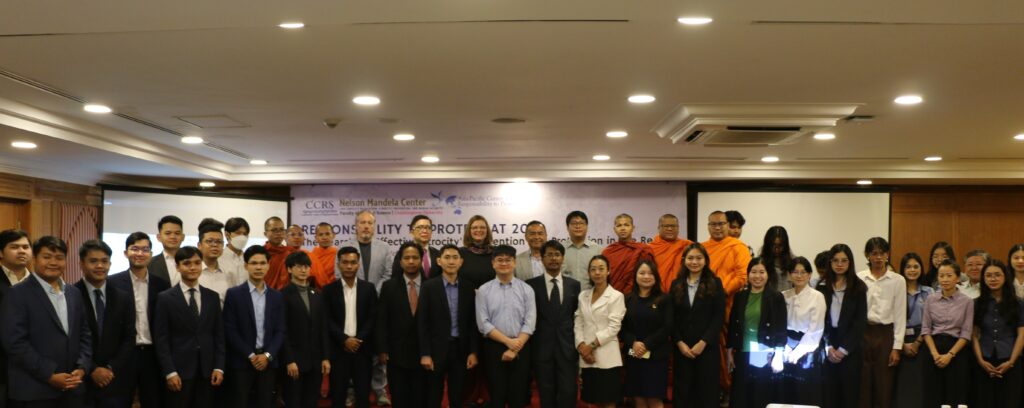
On 23–24 March, 2026, the Cambodian Center for Regional Studies (CCRS), in collaboration with the Nelson Mandela Centre (NMC) at Chulalongkorn University and the Asia Pacific Centre for the Responsibility to Protect (APR2P) at the University of Queensland, organized a workshop on R2P at 20: The Search for Effective Atrocity’s Prevention and Protection in the Region. Held at the Sunway Hotel in Phnom Penh, the event brought together over 50 participants, including representatives from the Cambodian Senate and National Assembly, government officials, academic researchers, and university students. The workshop was designed to discuss the twenty-year legacy of the Responsibility to Protect (R2P) norm and address the widening gap between global principles and regional implementation in Southeast Asia.
Opening Session
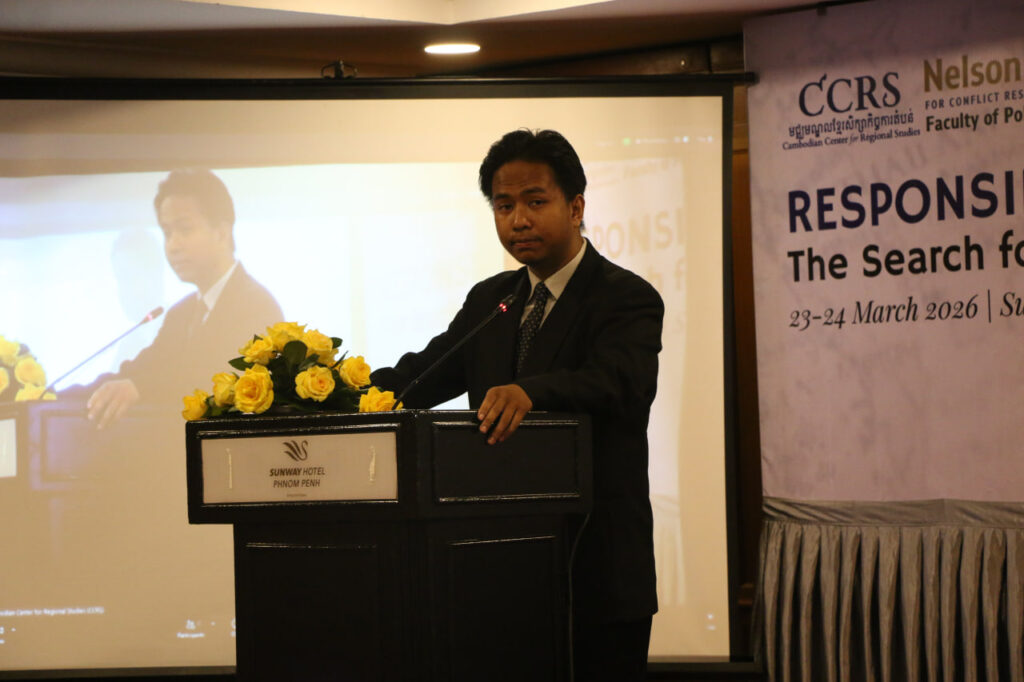
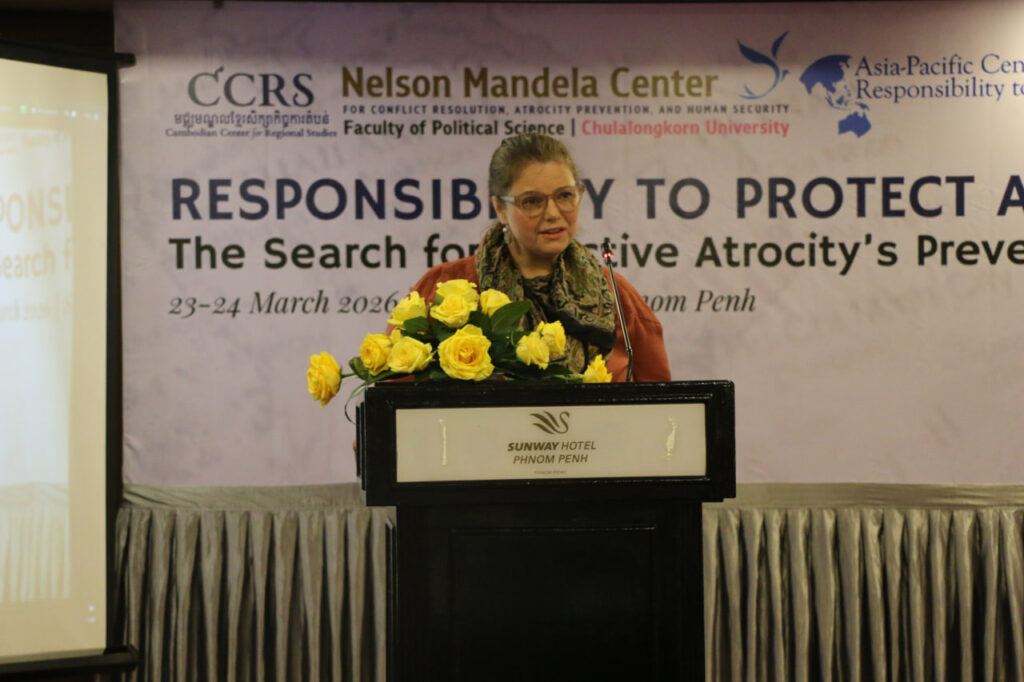
During the opening session, the organizers emphasized that R2P remains an essential moral framework in an increasingly volatile global landscape. Mr. Him Raksmey, Executive Director of CCRS, said that sovereignty must be viewed as a responsibility rather than an absolute shield against accountability, and mentioned that R2P remains one of the most important principles around which individual states and the international community can collectively work together through enhancing state capacities, and international cooperation to protect vulnerable populations who face the threat of atrocity crimes.
Dr. Sarah Teitt, Director of APR2P, argued that R2P provides the necessary moral clarity to prevent a descent into “the law of the jungle”, where power alone dictates legitimacy. She noted that R2P is consistent with existing international law and the UN Charter and was designed to constrain unilateral interventions and promote multilateral collective action through the UN. R2P serves to anchor the international community in a people-centered, rules-based order.
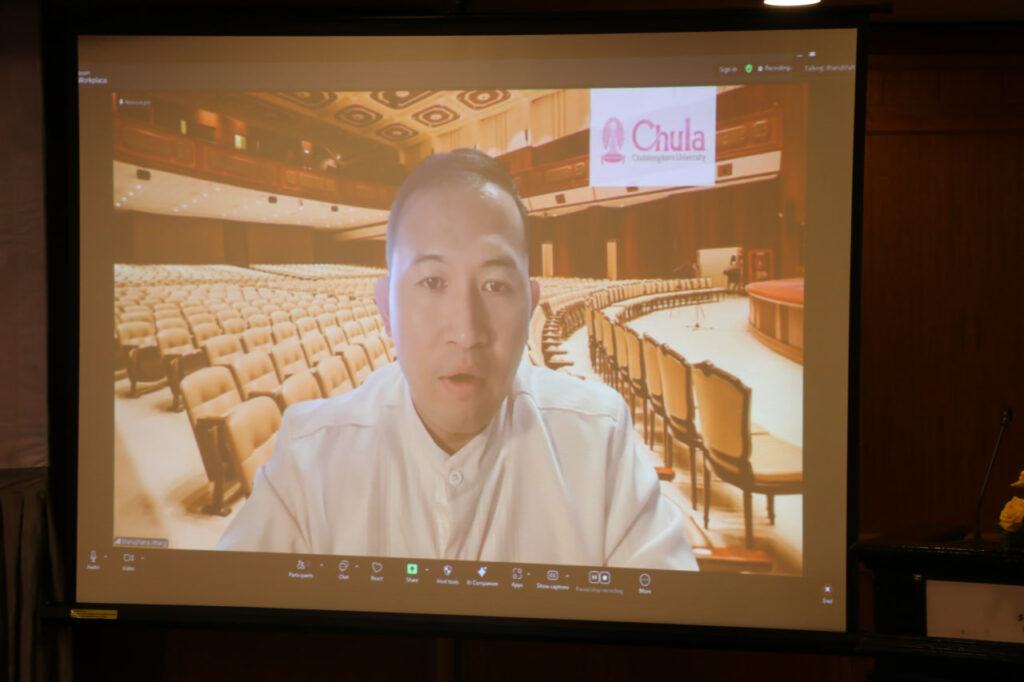
Adding a regional perspective, Dr. Bhanubatra Jittiang, Director of NMC, highlighted the profound interdependence of Southeast Asia, urging states to move beyond political mistrust and strengthen habits of cooperation to protect human dignity across borders. He emphasized that if Southeast Asia is to contribute meaningfully to atrocity prevention, it must do so in ways that are regionally grounded, politically thoughtful, and centered on the protection of people.
Session 1: The Progress and Challenges to R2P
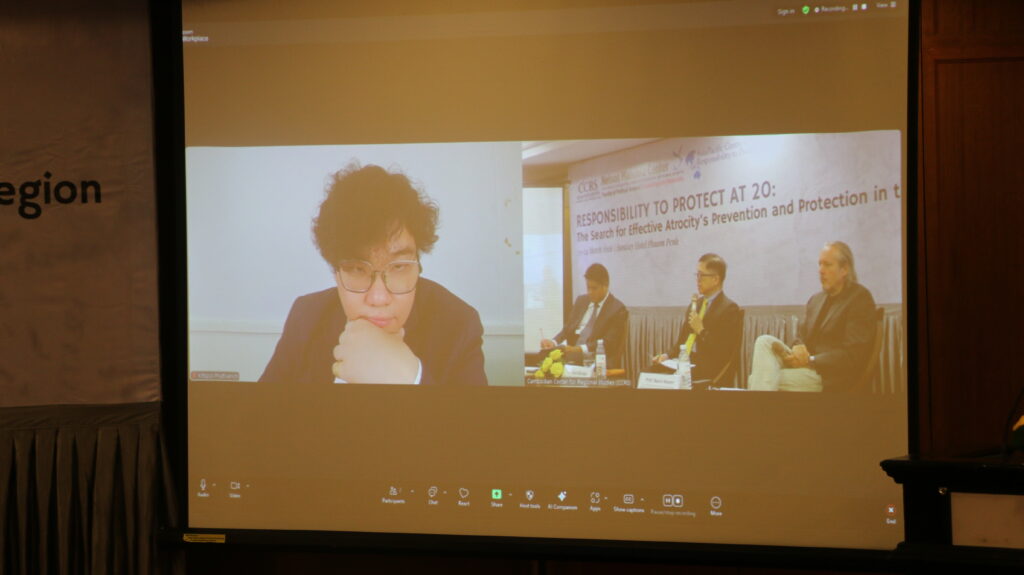
The first session, which focused on the progress and challenges of R2P over the last two decades, featured detailed presentations on the current state of the norm. Dr. Noel Morada, Research Professor at NMC and Research Fellow at APR2P, advocated for a “bottom-up” approach, arguing that R2P just like other international norms do not automatically cascade at the regional and domestic levels. Instead, the principle must resonate with domestic stakeholders, deepen knowledge and understanding through engagement with local champions, and promote capacity building through education and training in cooperation with academic institutions.
Professor Kevin Nauen, Senior Fellow at CCRS, explored the “Libya hangover”, explaining how the 2011 intervention led to the discredit of the norm as a perceived tool for regime change, which in turn fueled a resurgence of veto-driven paralysis in the UN Security Council regarding Gaza and Myanmar. However, he highlighted the “judicialization” of R2P—the use of the International Court of Justice (ICJ) and the International Criminal Court (ICC) by middle powers—as a vital modern pathway for accountability.
Dr. Kittipos Phuttivanich, Assistant Professor, Ramkamhaeng University, concluded the session by identifying structural paradoxes, specifically how major powers weaponize protection concerns to justify aggression and how the R2P framework remains dangerously limited to the physical domain, ignoring the rising threats in cyber and cognitive spheres.
The subsequent Q&A session, moderated by Mr. Chhuon Vanndasambath, Deputy Director of CCRS, tackled the systemic breakdown of global protection architectures and the functional survival of R2P. The discussion underscored the necessity of building the capacity of non-state stakeholders, such as the media and civil society, to act when national authorities fail. Key Takeaways from the discussion included:
- Sovereignty as Responsibility: R2P is a friend, not an enemy, to state sovereignty when sovereignty is defined by a state’s ability to protect its own people through good governance.
- The Bottom-Up Approach: Norms must be localized through universities, think tanks, and civil society to ensure sustainability and prevent R2P from being viewed solely as a “Western” imposition.
- The Multi-Domain Challenge: Atrocity prevention must evolve to address the Cognitive and Cyber Domains, as digital misinformation and AI-driven hate speech are now primary triggers for physical violence.
Session 2: Relevance of R2P in the context of Southeast Asia
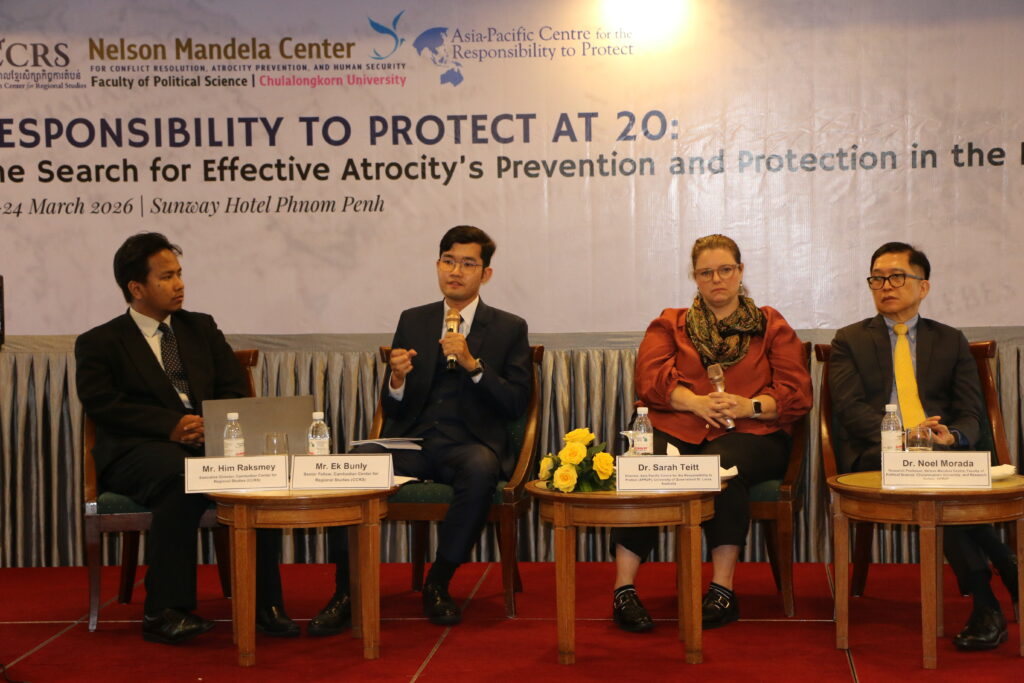
In Session 2 entitled “Relevance of R2P in the context of Southeast Asia”, the presenters explored the “uncomfortable relevance” of the Responsibility to Protect norm within a region characterized by a rigid adherence to non-interference.
Dr. Noel Morada argued that while ASEAN possesses a visible normative architecture—including the ASEAN Charter and the ASEAN Intergovernmental Commission for Human Rights (AICHR)—it fundamentally lacks the political courage to prioritize civilian protection over state sovereignty. Using the Myanmar crisis as a primary case study, he pointed out that states in the region still use traditional conception of sovereignty as a shield against accountability instead of upholding the primary responsibility of states to protect populations from atrocity crimes.
Dr. Sarah Teitt expanded the scope of R2P to include non-traditional multi-domain threats, specifically identifying the systematic abuse within regional scam compounds as potential crimes against humanity under the Rome Statute. The presentations collectively highlighted that R2P is most relevant in Southeast Asia not for its successes, but for how the ongoing suffering in places like Myanmar and the border regions of Cambodia and Thailand exposes the urgent need for a shift from event-based reaction to risk-based prevention.
Mr. Ek Bunly, Senior Fellow at CCRS, emphasized the importance of the relationship between political will of states and institutionalization of atrocity prevention in the context of Southeast Asia. He said that ASEAN should stop treating humanitarian assistance as a substitute for political strategy; and civilian protection should be institutionalized inside ASEAN regional practice.
Moderated by Mr. Him Raksmey, the Q&A session focused heavily on the practical barriers to institutionalizing R2P and the role of political will versus institutional design. The discussion also addressed the “empathy gap” in ASEAN, with speakers suggesting that integrating empathetic assessments into decision-making could help bridge the divide between rhetoric and action. The key takeaways from this panel comprised:
- From Reaction to Prevention: The region must move away from “event-based reaction” toward “risk-based prevention”, which includes establishing formal atrocity-risk assessments and early-warning mechanisms.
- Utilizing Alternative Platforms: When ASEAN is deadlocked by the “non-interference” norm, member states and civil society should utilize international platforms like the UN Human Rights Council and the ICJ to seek accountability and protection.
- Digital Literacy as Prevention: In the “multi-domain” world, digital and AI literacy are essential tools for atrocity prevention to counter the mis/disinformation and inflammatory rhetoric that often trigger physical violence.
- The Role of the Next Generation: Long-term regional change depends on young people internalizing R2P principles and pursuing leadership roles to create a “bottom-up” culture of accountability within state institutions.
Session 3: Pathways for Advancing Atrocity Prevention and Civilian Protection
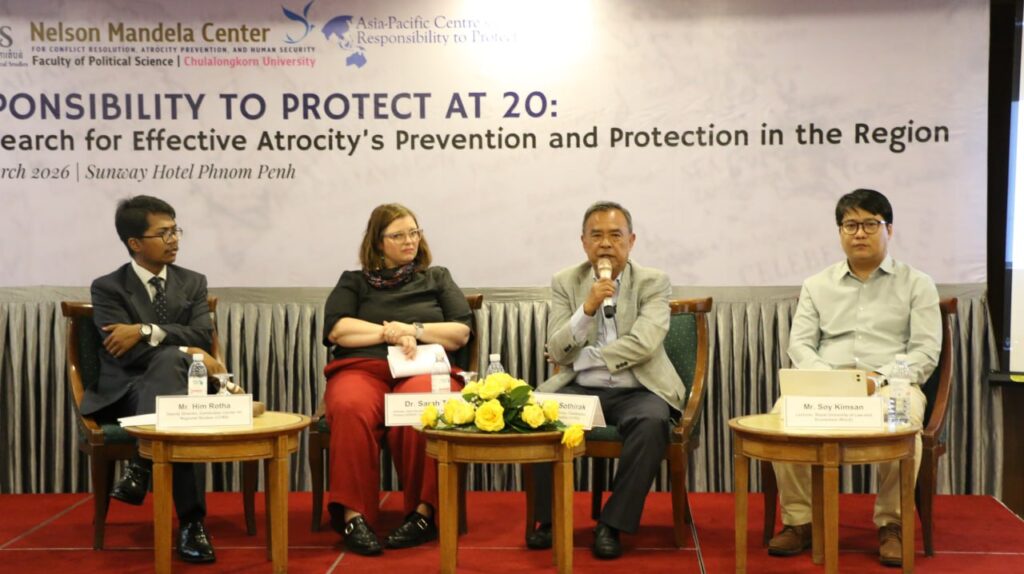
In Session 3, the distinguished speakers moved toward actionable prescriptions for embedding R2P principles into the ASEAN architecture. Mr. Soy Kimsan, Lecturer at the Royal University of Law and Economics (RULE), emphasized the “bottom-up” approach of instilling the culture of preventions and importance of international laws and principles such as R2P. He mentioned the necessity of academic mentorship and proposed a joint Cambodian-Thai digital platform to debunk the nationalist misinformation on social media that frequently serves as a precursor to physical violence.
Dr. Sarah Teitt built on this by advocating for the operationalization of the ASEAN Declaration on the Culture of Prevention, arguing that the region should focus on national prevention strategies that address root causes like identity-based exclusion and digital-era risks.
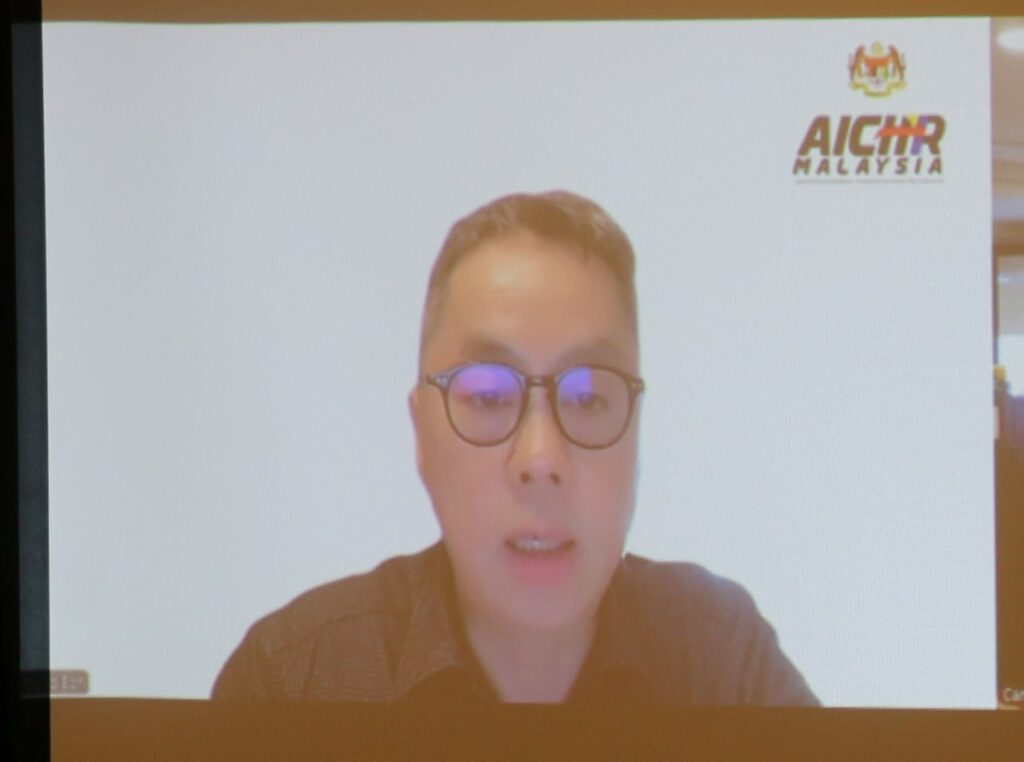
From a regional policy perspective, H.E. Edmund Bon, Representative of Malaysia to the ASEAN Intergovernmental Commission on Human Rights (AICHR), proposed an eight-point roadmap for ASEAN, which included expanding the AHA Centre’s mandate to address human-made disasters and strengthening conflict resolution protocols.
Amb. Pou Sothirak, Distinguished Senior Advisor to CCRS, stated that Cambodia’s tragic history with the Khmer Rouge grants it the moral authority to lead ASEAN by example, specifically through the creation of a National R2P Plan that filters high-level political will down into institutional reality.
The subsequent free discussion, moderated by Mr. Him Rotha, Deputy Director of CCRS, dived deeply into why ASEAN architecture remains more effective at protecting state sensitivities than human lives. The panel responded by identifying limited understanding of R2P as a major barrier, noting that the region often mistakenly treats humanitarian aid as a substitute for political strategy. The discussion clarified that while ASEAN’s non-interference norm is persistent, it should not lead to impunity; rather, states and civil society should utilize international platforms like the ICJ and UN Human Rights Council when regional bodies are deadlocked. Participants, particularly university students, explored the role of “People-to-People R2P”, concluding that long-term prevention depends on the younger generation’s ability to use digital diplomacy to promote tolerance across borders. The key takeaways of the third session pertained:
- Operationalize Existing Frameworks: Rather than creating new doctrines, ASEAN should use existing tools like the Culture of Prevention to address modern risks such as hate speech and disinformation.
- Expand Humanitarian Mandates: The mandate of the AHA Centre should be formally expanded beyond natural disasters to provide a framework for responding to human-made atrocity crises.
- National Prevention Plans: States should move from vague commitments to evidenced-based National R2P/Prevention Plans that include domestic risk assessments and early warning systems.
Closing Session
At the closing, Dr. Noel Morada reiterated his view that the bottom-up, ‘whole-of-society’ approach to atrocity prevention is still an important strategy for promoting R2P in the region. It is also important to emphasize that the principle is not primarily about intervention, and that R2P is friend to sovereignty if linked to good governance, rule of law, and protection of human rights, which could in fact enhance the legitimacy of the state. We need the whole of society to get involved, to speak up about violation against human rights, build early warning system, prevent the use of hate speech and incitement to violence, promote empathy especially to those who suffer, among others.
Dr. Sarah Teitt gave three excellent takeaways: (1) R2P provides clear language and a normative framework underscoring that atrocities should be prevented by states and the international community; (2) R2P encourages us to expand our moral horizon beyond state borders and insist that an atrocity anywhere is not a tragedy for ‘them’, but a failure of all of ‘us’; (3) R2P is anchored in a people-centered, rule-based order that reaffirms international law and the UN Charter. She also suggested that CCRS develops a concrete three-year work plan to move from discussion to coalition-building and mentioned that APR2P remains committed to assist Cambodia to promote R2P.
Closing the workshop, Ambassador Pou Sothirak gave important concluding remarks as follows: (1) this workshop provide opportunity to reflect during this time of conflicts and serve as a wakeup call to pave a way for regional maturity and empathy instead of violent conflicts for Southeast Asia as a region that is free from atrocity and suffering by improving relations between Cambodia and Thailand in seeking peaceful resolution to the current conflict, (2) R2P is a global political commitment endorsed by the UN in 2005 intended to prevent genocide, war crimes, ethnic cleansing, and crimes against humanity. Despite its unanimous adoption and progress has been made, R2P faces fundamental challenges that hinder its implementation and credibility cutting across its political, operational, and conceptual limitations. We, as individuals, all have the duties to find the best way to promote and operationalize R2P in our own national boundary to suppress mass crimes from happening.
CCRS would like to express our appreciation to APR2P and NMC for the collaboration in making this workshop possible. We also would like to thank to all participants for their active engagements in our workshop.